
- RLF News
- Article
Banned Books Week: The RLF writers who faced censorship
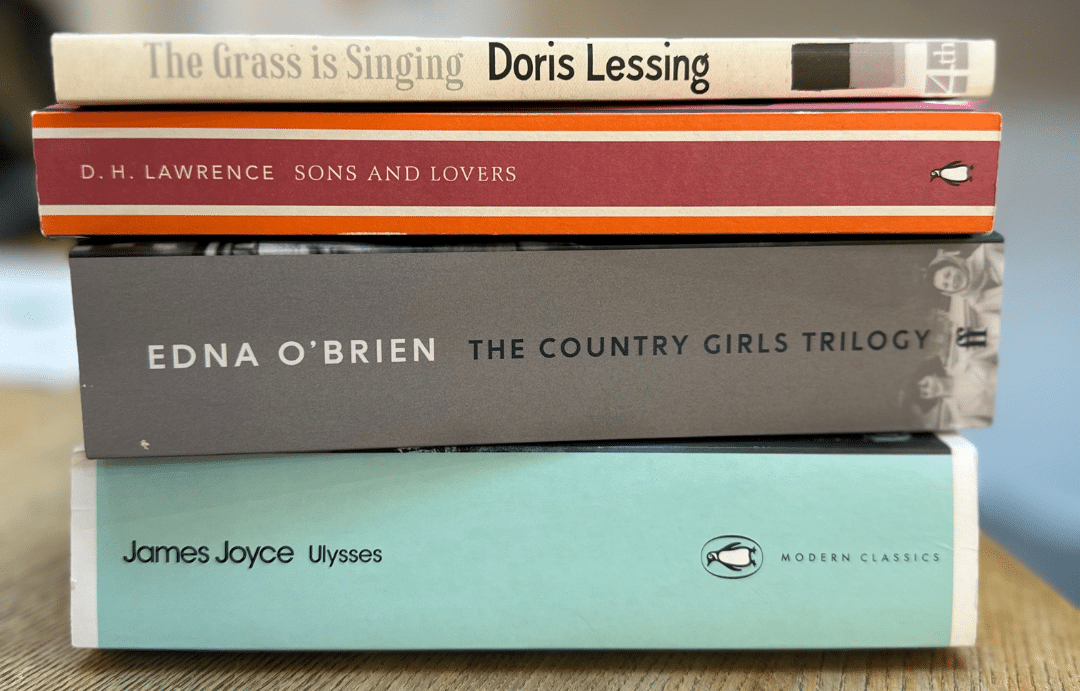
- 7 October, 2025
This week sees the return of Index on Censorship’s Banned Books Week, a campaign that celebrates books that have been challenged, removed or silenced, as well as the people who write, sell and share them.
Throughout the 235-year history of the Royal Literary Fund, a number of the writers we have supported have experienced such challenges. From accusations of obscenity to being labelled a “prohibited immigrant” to the infamous public prosecution of Penguin Books over DH Lawrence’s Lady Chatterley’s Lover, there are many stories of censorship and resistance in the RLF’s archives.
James Joyce’s Ulysses: an “obscene” masterpiece of realism
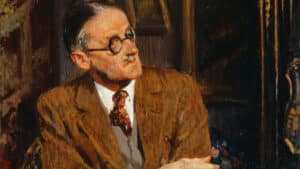
James Joyce by Jacques Emile Blanche.
The decades between 1920 and 1960 seem to have been particularly fraught with literary outrage. James Joyce’s Ulysses was one of several books banned during this time period. Now accepted by many as a modernist masterpiece, Ulysses – which jumps between the perspectives of three principal characters, Stephen Dedalus, Leopold Bloom, and Molly Bloom, as they go about their business on one specific Dublin day, 16 June 1904 – was first published in Paris in 1922 by Sylvia Beach’s Shakespeare and Company, now better known as the only English-language bookshop in Paris.
Ulysses had previously been serialised in London magazine The Egoist and American magazine The Little Review. These serialised versions led authorities in the UK and the US to ban publication of the book even before Joyce had finished writing it. Their main objection was to a scene within the chapter that became known as ‘Nausicaa’. It was deemed obscene by the censors for its depictions of sexual fantasy, voyeurism and masturbation, involving the characters of Leopold Bloom and Gerty MacDowell, a young woman who seemingly encourages Bloom’s attentions.
Joyce wrote Ulysses between 1914 and 1921 after the publication of Dubliners, his collection of short stories, and around the same time he was completing his first novel, A Portrait of the Artist as a Young Man (1916). War was raging across Europe, and Joyce and his wife Nora moved between several countries during this period. It was while living in Trieste in 1915, a year into the writing of Ulysses, that Joyce contacted the RLF to request financial assistance – in fact, the alternative occupation listed on his application is ‘English language teacher in Trieste’. His application was supported by literary greats William Butler Yeats and Ezra Pound, who was later closely involved in the development and publication of Ulysses. Pound, then an editor for The Little Review which originally serialised Ulysses, actually recommended Joyce edit his work to remove some of the references to “excrements”. Joyce did not comply, however, and in any case those scatological references in Ulysses seemed to concern the censors far less than Leopold Bloom’s obscene behaviours.
It wasn’t until 1933 that a judge ruled Ulysses, was not, in fact, obscene, meaning the book could finally be published in the USA. The UK followed suit in 1936. While the book was never explicitly banned in Joyce’s native Ireland, as it was never printed or imported, it was largely unavailable until as late as the 1960s – and when the 1967 film adaptation of Ulysses was released, it was banned by Ireland’s film censor.
Angus Wilson: a champion of gay rights
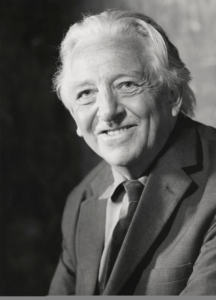
Angus Wilson by Godfrey Argent. National Portrait Gallery, London.
Novelist, short story writer and a Booker Prize judge for the infamous 1975 shortlist that included only two novels, Angus Wilson was both a former RLF beneficiary and one of a number of writers to leave a portion of his estate to the RLF upon his death.
As one of the UK’s first openly gay authors, Wilson wrote freely about the lives of gay men at a time when homosexuality was still a criminal offence in the UK and USA. This fact led to the suppression of some of his works, including by his American publisher William Morrow. They refused to publish his first novel, Hemlock and After, which was written in 1951 – 15 years before the Sexual Offences Act partially decriminalised male homosexuality in the UK. The book centres upon the conflict between the private life and public duty of its protagonist, Bernard Sands, a gay man trying to come to terms with his sexuality whilst navigating the middle-class hypocrisy of his conservative peers, not to mention his wife and two adult children. In many ways Hemlock and After is a typical satirical English comedy of manners, but the unflinching depiction of Sands’ sexuality and his inner turmoil meant the novel was shocking to many readers at the time. It did eventually find an American publisher, however.
Wilson came to writing later in life, having worked at the British Museum and been a World War Two codebreaker at Bletchley Park, an experience that drove him to have, in his own words, “a nervous breakdown.” Hemlock and After came after a collection of short stories called The Wrong Set (1949) but it was his second novel Anglo-Saxon Attitudes (1956), which follows another older male protagonist called Gerald Middleton as he reflects on his life and his various complicated relationships, that became Wilson’s most successful book. Wilson’s biographer Margaret Drabble called it “a long novel of a satisfyingly Dickensian richness, covering several decades of English history“, and in 1992 Anglo-Saxon Attitudes was adapted into a three-part TV mini-series which co-starred a young Tara Fitzgerald and Kate Winslet.
Wilson, who died in 1991, continued writing short stories, novels, plays and biographies until the late 1980s. He wrote freely and authentically about his life and experiences as a gay man and always insisted his long-term partner, Tony Garrett – a former colleague from the British Museum – was acknowledged as such. His 1980 KBE for services to literature was reported in the Daily Express as having been granted to “our latest nancy knight” and a number of public libraries refused to stock his books in the 1950s, but Wilson is remembered today as a champion of gay rights, as well as a writer of unsparing honesty and insight.
Doris Lessing: a “prohibited alien”
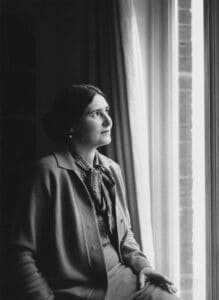
Doris Lessing by Godfrey Argent.
In October 1955 the novelist Doris Lessing, who would later go on to win the Nobel Prize for literature, wrote to the RLF requesting assistance. “I came to Britain from Southern Rhodesia in 1949, on the breakup of my marriage,” she said in her application letter. “I had, at that date, had nothing published. During that year, my first novel was published. Ignorant about conditions in England, I at once threw up my job as secretary and devoted myself to writing…I have been living on my pen ever since, though very precariously.”
The book she is referring to here, The Grass is Singing, is set in Southern Rhodesia (now Zimbabwe) during the years of Apartheid. It chronicles the slow implosion of the marriage of Dick Turner, a failed white farmer and his wife, Mary, who was brought up in a town and struggles to adapt to life on the poverty-stricken Turner farm. Mary hates the bush and viciously abuses the Black South Africans around her but, after years of loneliness, she becomes increasingly fragile and begins to turn towards Moses, a Black farm worker she has previously whipped for supposed insolence.
Most of the relationships in The Grass is Singing are fraught, complicated and ambivalent but the book is clear about the violent racism that props up the system in which all the characters live, and it – along with all her subsequent books – was subsequently banned in Southern Rhodesia and South Africa. Lessing herself was also named as a “prohibited alien” because of her work and her left-wing politics, something she discovered when she tried to visit South Africa in 1956. She later wrote about the experience for The New Statesman in an article entitled ‘Being Prohibited‘, saying:
A large number of my friends are locked out of countries and unable to return; locked into countries and unable to get out; have been deported, prohibited and banned. Among this select company I can now hold up my head. I am troubled, however, by secret doubts.
Doris Lessing on being prevented entry to South Africa
Lessing, who was born in Persia to British parents before moving to Southern Rhodesia, was a prolific writer whose works are unflinchingly, often brutally, honest about often horrifying realities. The Golden Notebook, which was published in 1962, is a stylistically fractured experimental novel that is nevertheless similarly frank about a wide variety of topics including women’s sexuality, male impotence and the end of communism.
Edna O’Brien: banned by the Irish censor
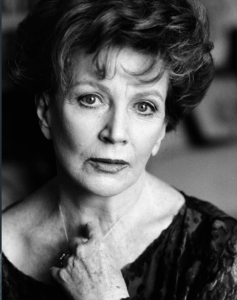
Edna O’Brien by Jane Bown.
When Edna O’Brien‘s The Country Girls was published in 1960 it was immediately banned by the Irish censorship board for its “sexually explicit content.” That was just the beginning of its infamy in Ireland. As novelist Eimear McBride recalls in her foreword to the 2017 reissue of the full Country Girls trilogy, the book was also “publicly burned by a local parish priest in search of some post-rosary Rama” and O’Brien herself received a number of “malevolent, anonymous letters” in the weeks and months after its publication.
The two subsequent books in the trilogy – The Lonely Girl and Girls in their Married Bliss which, together with The Country Girls, charted the lives of young Irish Catholics Caithleen/Cait/Kate Brady and Bridget/Baba Brennan from school to marriage to motherhood and beyond – were also banned upon publication. The Country Girls books were the subject of public disdain throughout the country for a number of years, and they remained prohibited in Ireland until the 1980s.
At the time of The Country Girls’ publication, Ireland was a country still dominated by an ultra-conservative Catholicism and a society described by McBride as “institutionally misogynistic”, particularly in rural areas like the village Cait and Baba come from. Throughout The Country Girls trilogy, the girls actively rebel against these narrow confines placed upon them by the institutions of church and school and state, through their relationships with their families, with each other, and with the men in their lives. It was O’Brien’s depictions of female sexuality and desire that seemed to particularly trouble the censors, however.
O’Brien, who was living in London when she wrote The Country Girls and was later supported by the RLF, never returned to live in Ireland, but the country of her birth was a continual source of inspiration. Later books included House of Splendid Isolation (1994), a thriller novel based on the life of Irish republican paramilitary leader Dominic McGlinchey and Down by the River (1997), based on the 1992 case of a 14-year-old Irish rape victim seeking an abortion. She was also an enthusiastic fan of the work of fellow Irish exile, James Joyce, publishing a biography of him in 1999.
I wouldn’t have got the raw stuff. And the raw stuff is very good for the real stuff.
Edna O’Brien on her early years in Ireland (via BBC)
DH Lawrence: author of “the book that changed Britain”
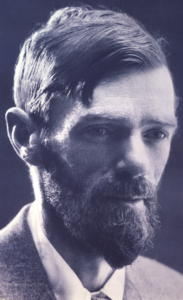
DH Lawrence by Ernesto Guardia; Peter A. Juley.
During the years of the First World War, DH Lawrence applied twice to the RLF for a hardship grant. The first was in September 1914, the year after the publication of his book Sons and Lovers, and the second was in July 1918, in between publication of The Rainbow (1915) and Women in Love (1920). Both his applications to the RLF were granted, and all three of those books faced varying degrees of censorship. Sons and Lovers was taken off library shelves; The Rainbow was – again – labelled “obscene” and subject to book burnings because of one description of a lesbian encounter; and its sequel Women in Love was banned for 11 years for its depictions of sex and female sexuality.
But it was Lawrence’s final novel, Lady Chatterley’s Lover, that went down in history – due, of course, to its role at the centre of the infamous 1960 obscenity trial between the Director of Public Prosecutions under the Obscene Publications Act 1959 and the publisher Penguin Books.
Originally published privately in 1928 in Florence and in 1929 in Paris, Lady Chatterley’s Lover follows the romantic and sexual escapades of Lady Constance Chatterley and her gamekeeper Mellors. According to Penguin, Lawrence himself said that the language he used in Lady Chatterley’s Lover was the furthest he had ever gone “to make the sex relations valid and precious, instead of shameful.”
So potentially scandalous was Lady Chatterley’s Lover that no UK publisher even attempted to publish the book until 1960, a full 30 years after Lawrence’s death. Penguin was planning to release the full unabridged version of the book when founder Sir Allen Lane received notice of legal action. Lady Chatterley’s Lover was to be the subject of a criminal prosecution which would invite a jury to pass their own verdict: were Penguin Books guilty of planning an obscene publication?
The trial began on 20 October 1960 and lasted six days. A number of experts were called to testify, with Penguin’s lawyers calling writers including Rebecca West and E. M. Forster to the stand. In the end, the jury took just three hours to find Penguin Books not guilty, and within a month of the verdict, Penguin had sold over two mission copies of Lady Chatterley’s Lover. Over 60 years later, the book is arguably Lawrence’s best-known work, and the verdict remains one of the most significant cultural moments in British legal history.
In today’s literary landscape, as authors continue to face censorship and book bans are once more on the rise, it is more important than ever to celebrate the right to read freely. At the RLF we are proud to support Index on Censorship’s Banned Books Week campaign, and we will continue to help writers in need through our range of hardship grants.
You might also like:
70 fascinating facts you might not know about the Royal Literary Fund
To celebrate our 235th birthday on 18th May, we’ve put together a selection of fascinating facts about the RLF from…
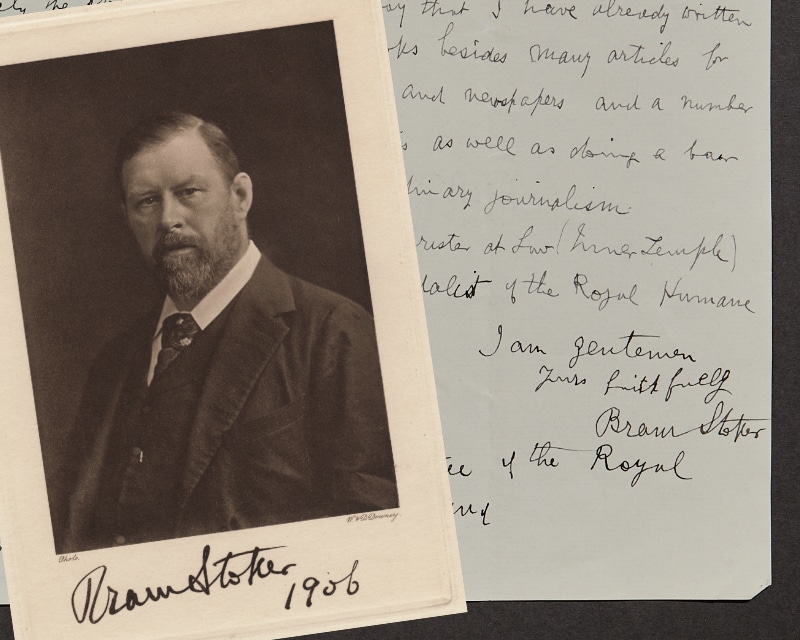
From the Archive: Bram Stoker (1911)
Weeks after the discovery of a previously “lost” Bram Stoker story and on the anniversary of his birth, we’ve taken…
Living by her pen: how the forgotten Gothic writer Regina Maria Roche’s legacy lives on
On International Women’s Day, Samiha Begum reveals the history and influence of this forgotten Gothic writer.