
- RLF News
- Article
My Writing Life: Sanjida O’Connell
- 8 September, 2025
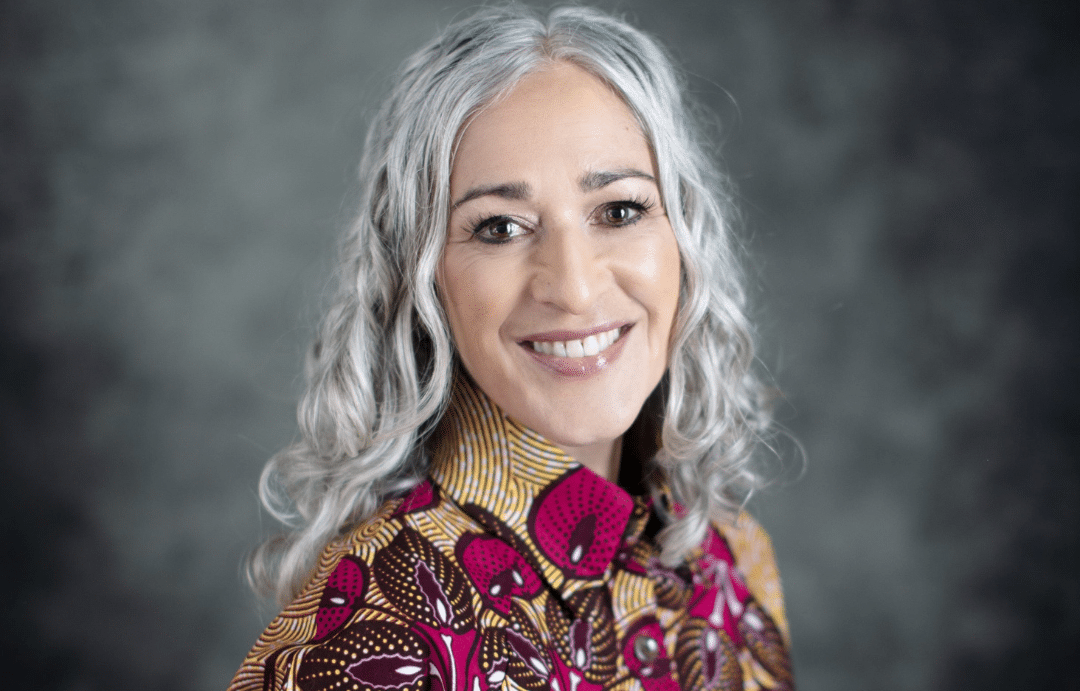
Dr Sanjida O’Connell is an RLF Fellow and writes Wild Writing with Sanjida. She has had four non-fiction books, eight novels and several short stories published. She writes psychological thrillers as Sanjida Kay.
1. What book should every writer read?
I think every writer should read as widely and as much as possible—anything and everything. I’d recommend reading deeply and widely within one’s own genre too. For anyone wishing to further their craft, I’d highly recommend, Story by Robert McKee. Although it’s aimed at screenwriters, it’s also very useful for novelists and even non-fiction writers because of its in-depth approach to story structure. It’s my bible: I’ve done Robert McKee’s Story course twice and I keep re-reading the book.
2. What is the one thing you wish someone had told you before you started your writing career?
I wish I’d been told it’s a rollercoaster: just because you have a book published, or even receive a multi-book deal or a large advance, that does not mean you’re set for life. I’ve won prizes for many of my books, I’ve had some excellent reviews, and occasionally amazing advances—and yet there have been times I’ve been afraid I wouldn’t be able to pay my bills or wouldn’t receive another book deal.
From a practical point of view, I wish someone had told me about Public Lending Right and the Authors’ Licensing and Collecting Society (both organisations help writers get paid when people borrow their books or copy extracts from them). Most of all, I’d love to have known about the Royal Literary Fund earlier and the incredible work the Royal Literary Fund does to help writers.
3. Who has been an influential figure in your writing career?
My stepfather, James O’Connell, an ex-priest and a professor of Peace Studies. He made me learn to touch type as a teenager, pushed me to train as a zoologist, argued with me at every turn about God and evolution, taught me the power of three and how to structure an academic essay; above all, he demonstrated that we are nothing without kindness.
4. What is the best advice you’ve ever received about your writing?
Cut as many words as you can.
This came from Jane Shemilt, a wonderful psychological thriller writer, and author of the bestselling, Daughter. It revolutionised my writing. I’m partial to description and her approach helped me sharpen and tighten my work. It sounds simple but the effect is radical. I begin every day by seeing how many of the words I wrote the day before can be expunged.
5. What was the proudest moment of your writing career?
Being shortlisted for the Betty Trask Award for my very first novel, published when I was twenty-five. Alex Garland’s The Beach, won, and Kate Atkinson’s Behind the Scenes at the Museum was also on the shortlist. I’m also proud that almost thirty years later, I’m still here and I’m still writing.
6. What is your typical writing day like?
Like the majority of writers, I can’t live on the income from my books alone, so I also work as an RLF Consultant Fellow teaching academic writing workshops to university students; I mentor writers and write my Substack newsletter, Wild Writing with Sanjida.
On a writing day, I’m up by 6am. I work out for an hour, do the school run, clear up the carnage of breakfast, mediate, make a black coffee, and then I begin. I write for 3-4 hours and I aim to produce at least 1,000 words. I have an hour for lunch —I walk through our rewilding project with the dog—and then I do things that are less taxing on my brain, such as admin and emails. My days are short: the school run is at 3.30. Once my daughter is doing her homework, I go for a walk or a run with the dog and then it’s tea and chores. I read or work for another hour before bed.
- What are you reading right now?
I normally have a book on the go in every possible kind of format and for every type of writing that I do. I never want to be without a story! So right now I’m reading:
Life after Life by Kate Atkinson for the sheer pleasure of her prose; Bird by Bird by Anne Lamott for her Woody Allen-esque schtick on the craft of writing; Orbital by Samantha Harvey as an audiobook; Butter by Asako Yazuki as an ebook; I’m Black so You Don’t Have to Be by RLF Fellow and director of WritersMosaic, Colin Grant, as research for my own memoir, Wilderness: In Search of Belonging, which is about rewilding and growing up dual heritage. And finally, as a thriller writer, I always want to be reading other people’s thrillers, so Asia Mackay’s A Serial Killer’s Guide to Marriage.
- Bookmarker or page-folder?
Both. I have a slight obsession with Dulux colour samples as bookmarks. I’m exceptionally pleased if I can colour co-ordinate the paint with the cover. Jamaican Bronze, for instance, is a perfect match for Life after Life.
When I find a wonderful passage or quote in a book, I fold the page. When I was younger and had more time, I would transcribe all these bon mots into notebooks.
Now I just ruin books.
This article originally appeared on our Substack.
You might also like:

My Writing Life: Alex Wong
“There are no practical revelations I wish I’d had earlier. I only wish I’d been able to save myself some…
My Writing Life: Anna Ellory
“Once you’ve got a clean sentence, don’t mess with it” – RLF Grants Beneficiary Anna Ellory
My Writing Life: Gordon Meade
“I suppose that my writing life, like my life in general, has been somewhat split between two time zones, B.C.…