
- RLF News
- Article
My Writing Life: Jake Arnott
- 31 August, 2026
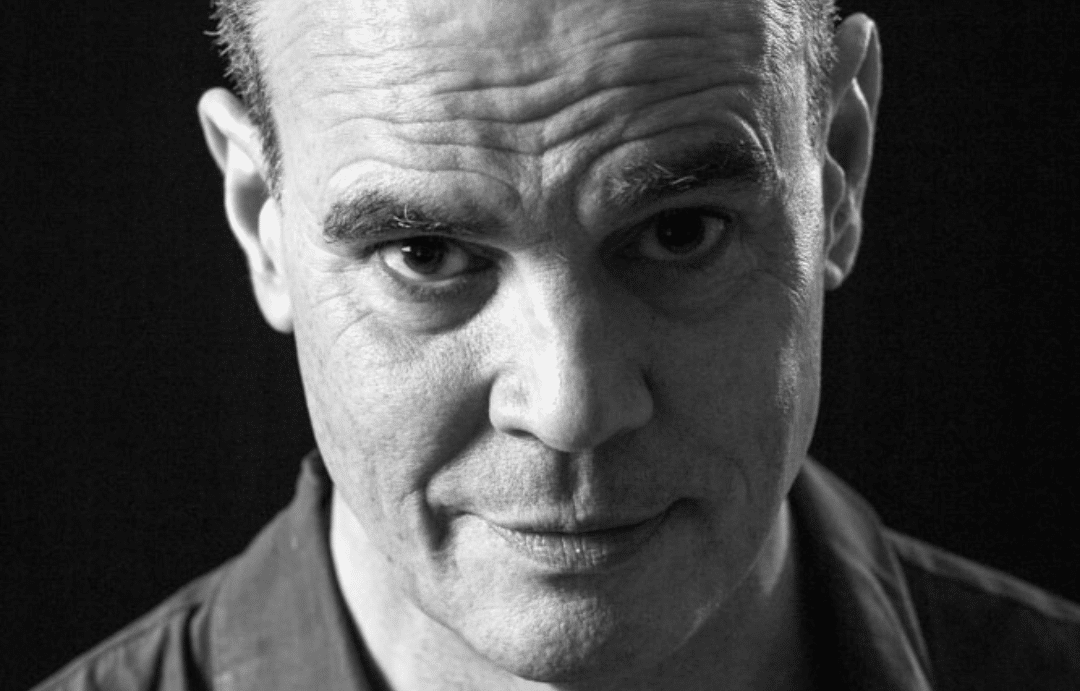
Jake Arnott’s bestselling debut novel The Long Firm was adapted as a BAFTA award-winning BBC TV drama series. His second, He Kills Coppers, was made into a critically acclaimed ITV1 series, and along with his third book, truecrime, formed a trilogy that won the Crime Writers Association Dagger in the Library. Subsequent works include Johnny Come Home, The Devil’s Paintbrush, The House of Rumour, The Fatal Tree, Blood Rival and Netherwood.
1. What book should every writer read?
Writers should read as many books as they can, it’s the only way to learn. But it’s a daunting prospect when you’re just starting out, because sooner or later you’re going to find something that really challenges you. And that’s the book that all writers need to face. I remember early on reading Going to Meet the Man, a collection of short stories by James Baldwin that nearly put me off altogether. I mean, they were so damn good, and I thought: I’ll never write as well as that. For maybe a week I gave up, feeling that there was little point in what I was doing. But then I realised that I’ll probably never write as well as Baldwin (I still can’t), but I’ll carry on anyway. The experience knocked back my ego a bit and made me less precious about my own work. In the end I kept going because I knew I could do better in myself as a writer.
2. What is your typical writing day like?
I’m not sure what is ‘typical’ for me. My writing practice has changed so many times, and I’ve never seen it as a definable routine. These days I like to work in the early mornings, though in the past afternoons were better for me. In the days when I had a day job, I would write at night. The only thing that has really remained constant in my method is the requirement that I go for a walk at some point in the process. I do my best thinking on my feet, maybe it’s something about the rhythm of movement that paces out ideas. Friedrich Nietzsche said: “Never trust an idea that has not been proved by a walk.” I’m certainly with Friedrich on that one.
3. Who has been an influential figure in your writing career?
David Bowie was a really big cultural influence on me, one of the most literary of rock stars. His songs often pointed to obscure, even forbidden, books. The queer narratives of Jean Genet and William Burroughs were first made known to me through him. There were elements of the New Wave SF of Michael Moorcock and JG Ballard in his work, as well as the future dystopias of George Orwell and Anthony Burgess. I was first introduced to Bertolt Brecht when Bowie performed the lead role in a BBC2 version of the play Baal, and Brecht went on to be a huge influence on my first published novel, The Long Firm. Bowie even took lines from the mainstream canon and added a new spin on them. At the end of ‘Rock ‘n’ Roll Suicide’ comes the plaintive refrain “give me your hands”, a clear reference to Puck’s farewell speech in A Midsummer Night’s Dream. I never had one of those ‘inspirational teachers’ that people often talk about, not at school anyway. It was Bowie’s fabulous lyrics, shot through with clues and references, that really made me want to play with words and write fiction myself.
4. What is the one thing you wish someone had told you before you started your career as a professional writer?
That there isn’t really any clear career structure for a novelist, and there’s certainly no guarantee of steady income. And success, if it comes, doesn’t necessarily last forever. I’ve been lucky, I’ve had some good years. But I’ve had fallow times too, and you have to prepare yourself for that. It doesn’t get any easier, that’s for sure, but in a way that’s the point. Writing is a struggle, and that’s what makes it worth doing.
5. What is the best advice you’ve ever received about your writing?
I think if I had taken some of the advice about writing I was given, I’d never have got anywhere! I remember someone saying: “write what you know” and realising that just wasn’t going to work for me. I write to find things out; I’m not even sure what I know about anything. So maybe the advice I have ignored has been more useful than any I have taken. You have to follow your instincts as a writer. And I’m very wary of giving advice, especially to aspiring writers, it could so easily be distracting or just plain wrong for them. All I usually offer is: be lucky. It’s the only thing that makes any real sense.
6. What has been the proudest moment of your career so far?
When my mother died, I found a big file where she had collected all my press, from the big features and reviews to the tiniest mention on a book page somewhere. A huge hoard of clippings, I was so moved that she’d kept them all. I know I caused her a lot of grief, especially in my teens. Dropping out of school and getting into trouble, seemingly drifting through life. I know there were many times when she worried that I wouldn’t achieve very much. Success came quite late, and one of the best things about it was that it made my mother happy. My proudest moment was knowing that she was proud of me.
7. What are you reading right now?
I’ve just reviewed Irvine Welsh’s new novel Can Nothing Save Us? for The Guardian. It’s quite a surprise, an epic intergenerational family drama set in contemporary Las Vegas. Expansive, heartfelt and shot through with Rabelaisian wit, it’s a bold, insightful work and a real departure. Welsh has written his version of the Great American Novel, and his ambition has really paid off. It’s inspiring to see a seasoned writer try something entirely new, late into their career. Staying safe and predictable can really thwart creativity
8. Bookmarker or page-folder?
I can’t imagine why anybody would want to cruelly fold the corner of a page when bookmarks are themselves such instruments of creativity. Alfred the Great had one fashioned from gold and precious jewels; it’s said that Cyril Conolly once used a rasher of bacon while hastily reading at breakfast. And in Breakfast at Tiffany’s, as the unnamed narrator uses the strips of torn up love letters from the many suitors of Holly Golightly to mark the page of his book, these cut-up fragments form their own disjointed narrative: ‘Remember and miss you and rain and please write and damn and goddamn were the words that recurred most often in these slips: those, and lonesome and love.’
This article originally appeared on our Substack.
You might also like:
My Writing Life: Annie Siddons
“If you desire stability, holidays, nice stuff, and not being poleaxed by anxiety, choose another career.” – Annie Siddons
My Writing Life: Eric Ngalle Charles
“The best advice I ever received about my writing? – ‘Eric, this is crap.'” – poet, author and RLF grants…
My Writing Life: Benjamin Wood
“I had a creative writing instructor tell me: ‘Real life is no excuse for bad fiction.’” – Benjamin Wood