
- RLF News
- Article
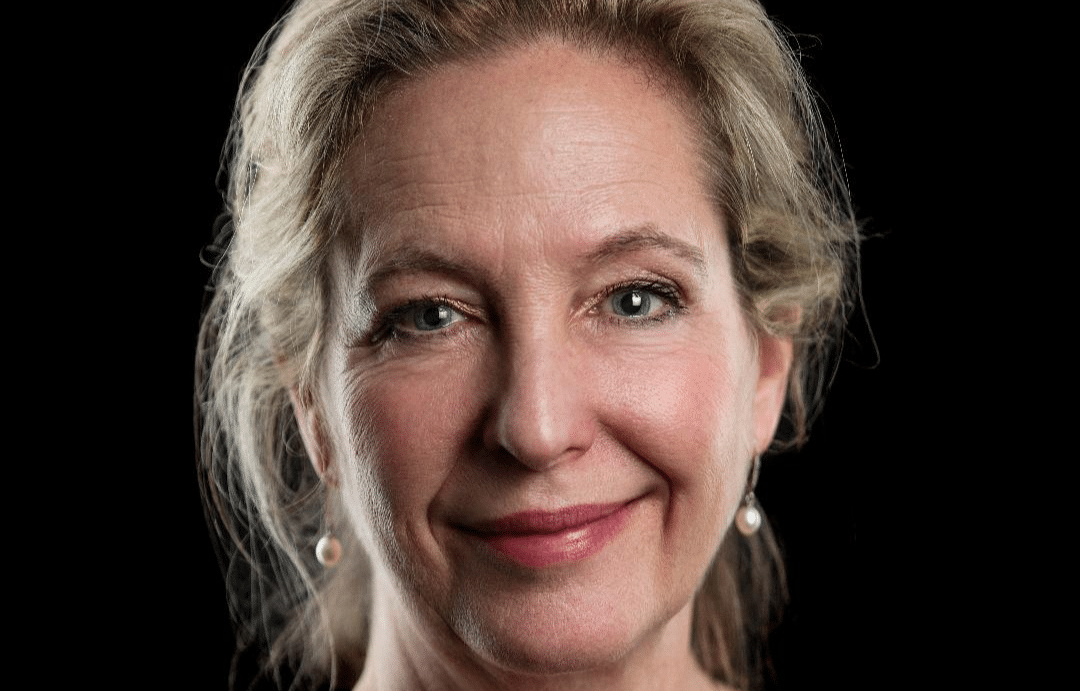
My Writing Life: Katie Hickman
- 26 January, 2026
Katie Hickman is a novelist and historian, and the best-selling author of ten books. Daughters of Britannia, about the lives and times of British Diplomatic wives, was in the Sunday Times bestseller lists for five months, and was adapted into a twenty-part radio series for BBC Radio 4 Woman’s Hour. Her most recent work, Brave Hearted: the Dramatic Story of the Women of the American West, won the prestigious 2023 Willa Literary Award for Creative Non-Fiction. Her work has been translated into twenty languages.
1. What book should every writer read?
The first thing that popped into my head when I saw this question was – and I’m only half joking – Enid Blyton. It is a metaphor, of course, for saying, that not only should we read as much and as widely as we can (I doubt anyone is reading this who does not already do that), but that even books that literary folk can be a bit sniffy about can teach you something (What’s in here that appeals to people? Why doesn’t it work for me? What would make it better?). When I was growing up, there was a division between parents who would ‘let’ their children read Enid Blyton (like mine), and those who were avidly against her books. I think the objection was that her grammar was less than perfect, but what child ever read The Secret Island thinking, “well, her sentence structure isn’t up to much.” The joy of losing yourself in an adventure story for hours, quite possibly days on end, is one of the great pleasures of life, and was certainly one of the factors that made me want to write stories of my own.
But for anyone who wants to see right into the depths of a writer’s soul, I would recommend The Diaries of Virginia Woolf.
2. What is your typical writing day like?
There is a quotation from the Mexican essayist, Alfonso Reyes, who wrote that he always got to his desk as early as possible when he was writing “to skim the cream off the day.” In the ideal world, I am up at six o’clock, go for a walk, and am at my desk by seven at the latest. I work through until lunchtime, then spend the rest of the day reading, editing, or doing other admin. In the real world, life encroaches in the form of my garden, my husband, the lure of the river on which we live, and the laundry basket, and I usually make it to my desk by about ten. My best work is definitely done in the morning.
3. Who has been the most influential figure in your writing career?
I am a huge admirer of Antonia Fraser for all sorts of reasons. Not only is she a brilliant historian, but her books are meant to be read and have real narrative drive. Her study of women in the seventeenth century, The Weaker Vessel, was very helpful to me when I was trying to find a structure for my first history book (Daughters of Britannia). She is unfailingly generous to other writers, I suspect particularly to women, and although now in her 90s, is not only still writing, but fabulous company too.
4. What is the one thing you wish someone had told you before you started your career as a professional writer?
I am incredibly thankful that no one ever told me anything much (although I do remember some pitying looks from my parents). When you are young, it is a wonderful thing not to know too much about the stumbling blocks ahead. You do not know that what you are trying to do is impossible, so you go ahead and do it anyway. I sold both my first and my third books without an agent, and for the latter, A Trip to the Light Fantastic, I held my own auction, selling it to the highest bidder out of three publishers (HarperCollins bought it, with whom I then remained for the next ten years). When I think back on that now, it seems quite incredible that I ever had the nerve.
5. What is the best advice you’ve ever received about your writing?
My very first editor, a wonderful man called David Burnett at Victor Gollancz, once said to me, “Don’t be too polite.”
6. What is the proudest moment of your career so far?
Holding the very first copy of my very first book, Dreams of the Peaceful Dragon: A Journey Into Bhutan, is a moment that I will never forget. I remember too my pleasure (not unmingled with surprise) when an elderly, almost house-bound, neighbour of some friends of mine in deepest rural Somerset said, on meeting me for the first time, how much she had enjoyed reading it. This was long before the days of e-books or audio, and she was many, many miles from a bookshop, but a large print edition had turned up in the travelling library that used to stop outside her cottage each week. I was incredibly proud that someone had chosen my book to be in that little library doing the rounds of the Somerset lanes.
7. What are you reading right now?
Lonesome Dove, Larry McMurtry’s Pulitzer Prize-winning epic, is about an ill-assorted group of cowboys travelling a trail from Texas to Montana just after the Civil War. My last book, Brave Hearted, is a history of women in the American West, and I’m still obsessed with the subject, particularly anything to do with the Rocky Mountains. I have travelled a good deal along those same routes, and you can almost feel the grit and heat beneath their feet.
8. Bookmarker or page-folder?
Bookmarker!
This article originally appeared on our Substack.
You might also like:
My Writing Life: Mike Gayle
“The best advice I ever received was not to hold onto anything too tightly.” – Author and journalist Mike Gayle
My Writing Life: Cerrie Burnell
Children’s author, actor and activist Cerrie Burnell – who is also an RLF grant beneficiary – on her writing life…
My Writing Life: Fraser Harrison
“Stamina is really important. And if you haven’t got it, then you’re going to starve.” – RLF beneficiary Fraser Harrison