- RLF News
- Article
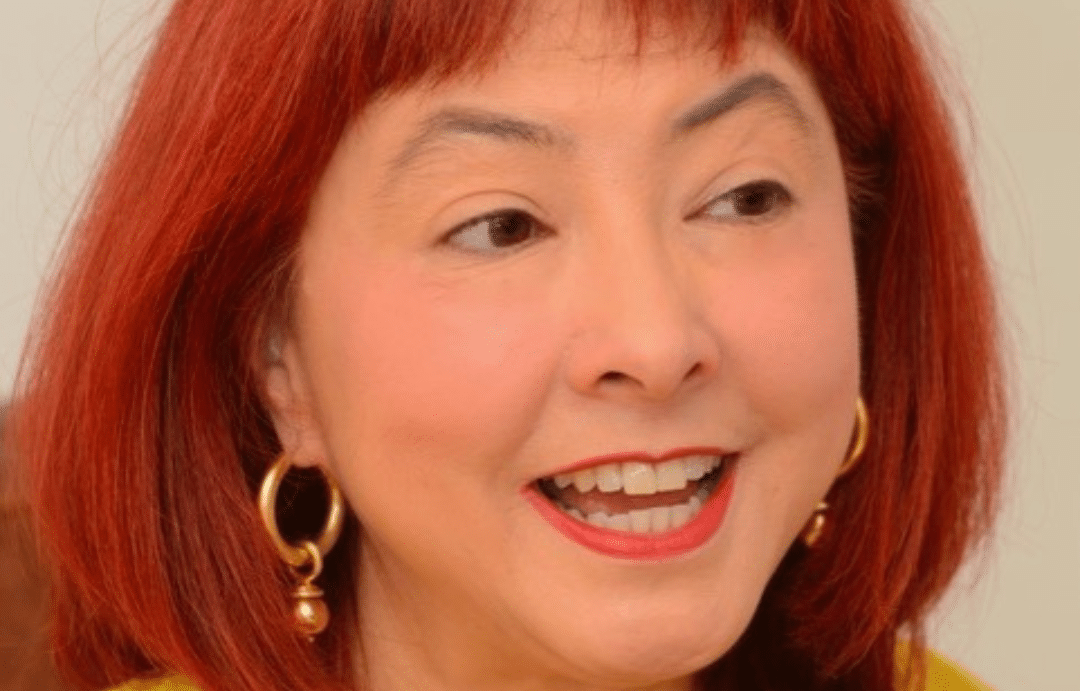
My Writing Life: Ming Ho
- 2 June, 2026
Ming Ho writes for stage, screen, and audio drama. Her play, The Things We Never Said(BBC R4), won the WGGB Best Radio Drama Award, 2018. Other credits include EastEnders, Casualty (BBC TV); Heartbeat, The Bill (ITV); Riot Girls: Male Order (BBC R4), and commissions for LAMDA, RADA, Leeds Playhouse, and Theatr Clwyd.
1. What book should every writer read?
I don’t think there can be one definitive book or work that every writer should read – we are each inspired and informed by different things at different times. I would, however, recommend reading anything that you’re not supposed to. When I was about eight, I remember going to a children’s book fair and being told by an adult that I shouldn’t have a book I’d chosen because it was ‘only suitable for age thirteen’. Reader, I bought the book. Similarly, at one school, we were discouraged from studying poetry because it was not an exam syllabus option that the teacher supported for the whole class. These are not good reasons to limit your imagination. In these times of increasing political censorship, it’s particularly important that if someone tells you not to read something, you read it to find out why.
2. What is your typical writing day like?
A lot of procrastination, AKA research! I don’t really have a typical writing day at the moment, but if I’m writing commissioned drama, that has to be more disciplined. I would spend the first few days constructing the scene-by-scene breakdown; then I’d set myself a minimum number of scenes per day, to deliver the draft by the deadline, e.g., six–three in the morning, three in the afternoon or more if I’m up against it. They could be any six, not necessarily chronological, and I’d try to choose a mixture of different types of scene (big set pieces, like rows in the pub, interspersed with intimate two-handers, small groups, comedy/action/emotional drama), so that I wouldn’t be left with all the difficult stuff I’d been avoiding at the end. Subsequent drafts are more unpredictable, depending on what kind of notes you get back and how much restructuring is required. A seemingly small note can have a big knock-on.
3. Who has been an influential figure in your writing career?
Influence can be both positive and negative. Just putting that out there, as I’m sure many of us will have had our confidence dented by a negatively influential person! On the positive side, my BBC radio producer, Abigail le Fleming. We’d first worked together in TV, on Casualty, and years later she championed my debut radio play, The Things We Never Said, which I’d written on spec for stage, inspired by the emotional and psychological impact of my mum’s dementia. As an impressionistic, non-linear piece, it was not an easy pitch and was initially turned down, but Abigail stuck with it, finally got it commissioned, and directed it with great intelligence and sensitivity.
4. What is the one thing you wish someone had told you before you started your career as a professional writer?
That having the ability to write is only a tiny fraction of the job of being a writer. If you want to get paid for your work and maintain some semblance of a career, particularly in dramatic media, it’s about 90% hustle (pitching, networking, fostering collaborative relationships, reading industry politics, and now marketing and PR as well). If that doesn’t come naturally (and it doesn’t for me), you have to learn.
5. What is the best advice you’ve ever received about your writing?
Probably a version of ‘less is more’. In general, I find it hard to be pithy. I tend to write long first drafts and spend the rest of the time editing down to get to the essence. Even when you think you’ve cut it to the bone, there’s usually still something that can go. A good editor’s eye is useful for illuminating what’s unnecessary, but when it comes down to word count, I’d rather do the final cut myself, to preserve the rhythm, which sometimes gets forgotten.
6. What has been the proudest moment of your career so far?
It would be tempting to say winning the Writers’ Guild Best Radio Drama Award for The Things We Never Said, but although that was a lovely moment of professional validation, I think I was most moved by, and proud of, the reaction of the audience when it first went out, with no fanfare on a weekday afternoon. Almost instantly, people I’d never met were tweeting about it, seeing their own experience reflected in something I’d thought was very personal to me. It was my first original work to be broadcast, after years of writing continuing drama for TV, and that reaction said I’d written something really truthful and universal.
7. What are you reading right now?
Falling Leaves by Adeline Yen Mah. I’ve had this on my shelf since it first came out; at the time, I probably bought it because I felt I should, but I resisted identifying with it. My dad was born in Shanghai and spent his first fourteen years there, during the Japanese Occupation, civil war, and Communist Revolution. His parents worked in the textile mills, and took the family to Hong Kong just before the Communist takeover in 1949 (although my dad stayed behind at school for a while until they got established, which must have been hard). He died in 1988 and never talked about his past, and I never asked. As a child of mixed heritage, I saw myself as wholly British and just wanted to fit in.
More recently, however, I’ve embarked on a quest to piece together his story and went to Shanghai for the first time last year; I’m going back there soon (geopolitics permitting!), and making my first visit to Hong Kong en route. In preparation, I’m catching up on background reading, although I haven’t found much that describes the everyday lives of the ordinary Chinese – most English-language publications, both fact and fiction, focus on the Western ‘Shanghailanders’ or the wealthy and influential Chinese upper class. Sisters and Strangers: Women in the Shanghai Cotton Mills, an academic study by Emily Honig, comes closest to giving me a picture of daily life in the mills of my grandparents’ day, while Last Boat Out of Shanghai by Helen Zia, based on a series of journalistic interviews, explores the stories of Chinese migrants to the US, who left around the same time as my family.
8. Bookmarker or page-folder?
Bookmarker! Though I never have a proper bookmark, just a leaflet or flyer, whatever’s nearest to hand.
This article originally appeared on our Substack.
You might also like:
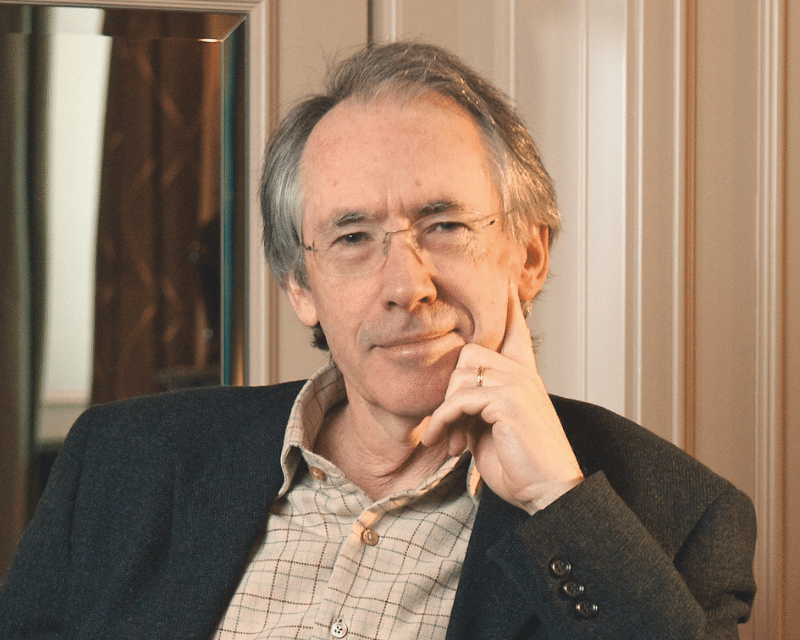
My Writing Life: Ian McEwan
“Recognise the intense pleasure and privilege of living by one’s writing.” – Ian McEwan
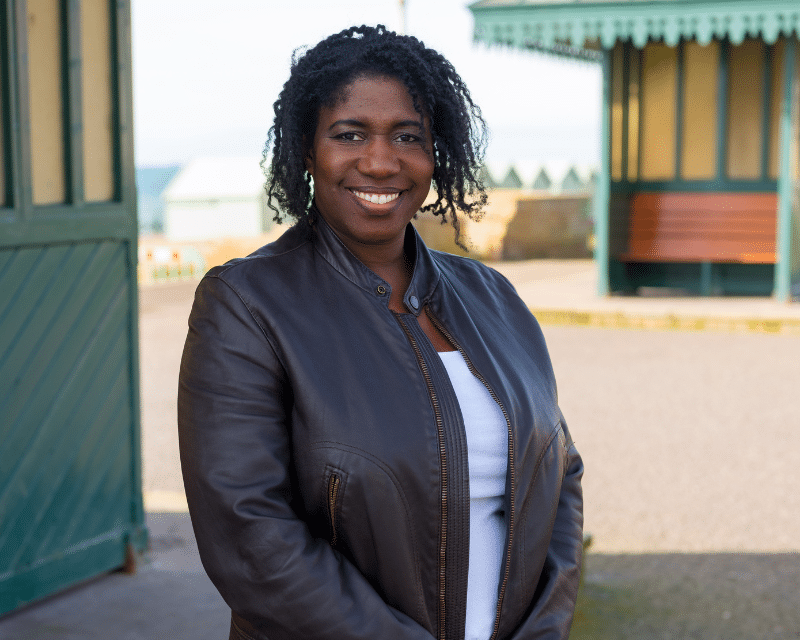
My Writing Life: Dorothy Koomson
“All writers face rejection – it doesn’t make it easier to immediately accept, but it can be comforting to know…
My Writing Life: Adam Weymouth
“Learning how to graciously accept good editing is one of the most important skills of all.” – Adam Weymouth, JB…