
- RLF News
- Article
My Writing Life: Penny Pepper
- 23 February, 2026
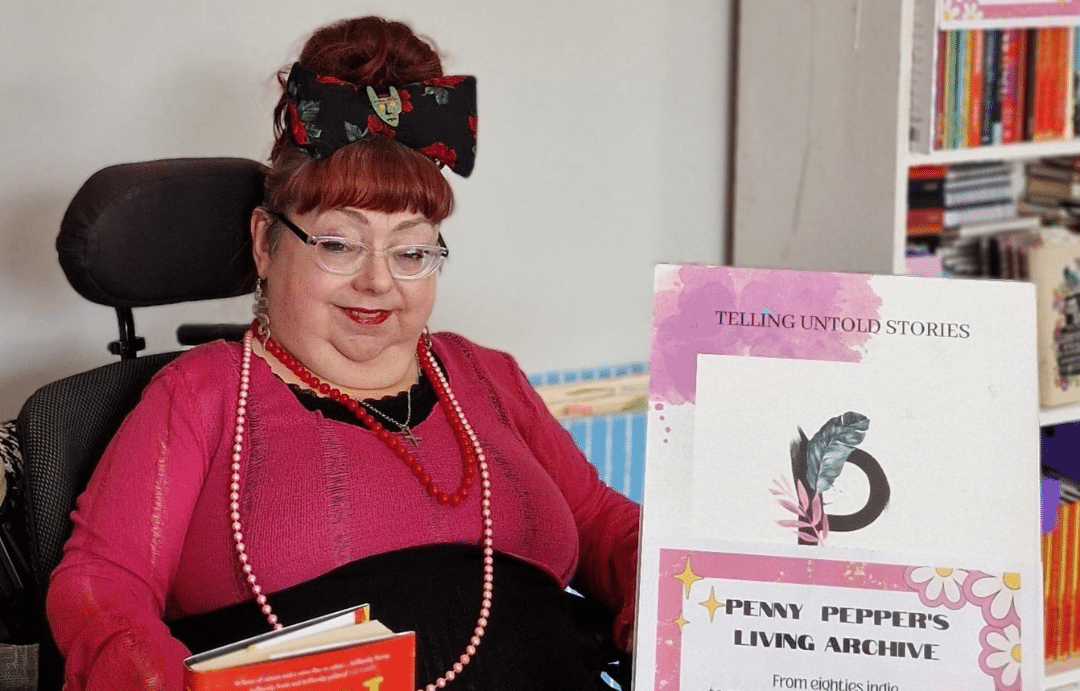
Penny Pepper is an award-winning author and poet who works tirelessly to explore and amplify the disability narrative in fiction, through provocation and humour. She has a memoir, First in The World Somewhere (2017) and a poetry collection, Come Home Alive (2018). Her stories feature in Elemental (2024), Hemingway Shorts (2021) and Mslexia; her non-fiction in Byline Times, Wellcome Collection and The Bookseller.
1. What book should every writer read?
An impossible question to answer. Especially as I’m easily led by whoever is my favourite author of the moment. So, I’m answering this question from a number of perspectives.
- On Writing: A Memoir of the Craft by Stephen King – I like his warm and unpretentious guidance, and he is, after all, an incredible storyteller.
- Nights at the Circus by Angela Carter – for sheer lyrical beauty and rule-breaking. She influenced me on multiple levels in my obsession with looking beyond the ordinary and discreetly inspiring my first novel, Nancy Jones and the Show of Wonders (still unpublished).
- Delta of Venus by Anaïs Nin – yes, I started with the rude ones because she wrote about women and desires in a way that unleashed the possibilities of a sexual life to my innocent eyes. I’m also obsessed with her journals, which inspired me to start my own in 1979.
- Kindred by Octavia Butler – another magnificent storyteller, much of what she writes I relate to, for different reasons of othering, which shows that the roots of prejudice share commonalities.
- The Sexual Politics of Disability: Untold Desires, co-authored by Tom Shakespeare, Kath Gillespie-Sells, and Dominic Davies – yes, I am a contributor, and I’m proud. The book was revolutionary and is still worth reading, over twenty years later, for the insight it offers into the most human aspect of being a disabled person: the need to be loved and desired.
2. What is your typical writing day like?
As a disabled writer, I use a combination of voice dictation software and an actual human being, which means my writing days are organised around access needs. I start at 11:30 am and finish at 4 pm, aiming for three days per week. Around this, I’m naturally given to endless scribbles in a hundred tiny notebooks, diaries and scraps of paper. As a night owl, despite the protestations of my body demanding rest, I will often do fast dictations on my phone while in bed. I handwrite slowly. This can be a positive, as it allows for steady, instinctive thinking, particularly for poetry, although naturally there’s never enough time to get what I want onto paper or screen.
3. Who has been an influential figure in your writing career?
I want to start by thanking the first influential figure in my life, my English teacher, Mrs Marsh. Around the age of thirteen, stuck in an institution, part-school, part-hospital, she was the first person to tell me I had the signs of genuine talent as a writer. It’s impossible to pick out other individuals easily. Rosemary Sutcliff is worth mentioning, even though our work is very different. She was, at least, a disabled writer who, in my youth, urged me on. In reality, though, it has been a long, lonely journey – that is, finding who will listen to my pet passion, revealing the disability narrative within fiction.
4. What is the one thing you wish someone had told you before you started your career as a professional writer?
Patience is everything, in parallel with accepting the hard graft and resisting the fantasy of fast, overnight success stories.
5. What is the best advice you’ve ever received about your writing?
Rosemary Sutcliff told me, ‘Never give up.’ Others have said value what you do, but always be open to learning. I’ve liked being told the best writers, including Shakespeare, made mistakes – you can even go and see them in the British Library! More recently, my lovely friend, author Jake Arnott, says to always write for yourself first, and ignore all the fuss that, these days, can come with it – i.e. social media, PR, etc.
I was reluctant, initially, to write a memoir because there’s a sad history of disabled writers becoming a one-trick pony when coaxed into writing about ‘My Life’, too easily drawn into either stereotypes of misery memoir, or triumph over tragedy, to then largely disappear as a writer once the ‘novelty’ factor has gone. However, through trusted friends on the edges of publishing, I was encouraged to realise I had a rich story outside of being ‘merely disabled’. This led to the publication of my memoir, First in the World Somewhere, by Unbound in 20171, through the support of Becky Swift, founder of The Literary Consultancy. I did enjoy the excitement the publication generated and the help of various champions at Unbound. There was a pre-launch at the Edinburgh International Book Festival. I did press calls – there was even a sense of the paparazzi swarming around me! I remain sad to this day that opportunities were lost in making the most of the book – the old challenge of marketing, in that very little took place despite my own best efforts to share ideas regarding opportunities and outlets that I knew would be interested in my story as the punky working-class wheelchair-user making her way to London. I live in hope that a revised paperback may yet get out there.
7. What are you reading right now?
As I mostly access books through audio – I’m moderately visually impaired, and anyway, hard copies of books are too heavy, or thick, for me to hold (apart from slim poetry tomes) – I have a variety on the go simultaneously. Like other writers I’ve read about, I often go for books that are the complete opposite of the genre I’m working in. Therefore, I’m currently reading a lot of non-fiction, mostly history and British folklore, with the occasional short story collection sneaking in. The last novel I read was the 2024 Booker winner, Orbital, by Samantha Harvey – an enjoyable elegiac study that’s full of beauty and philosophy, with a bit of sci-fi. All up my alley, but actually, dare I say it, not much of a story.
8. Are you a bookmarker or page-folder?
Ha ha – a funny question for someone who doesn’t read that much in the ‘real world’! However, when I do pick up a hard copy, such as one of my Faber poetry anthologies, I usually fall back on a postcard bought during a visit to a museum. The current one is Blue Cat by Louis Wain.
This article originally appeared on our Substack.
You might also like:
“Against this backdrop, I wrote and I wrote…”
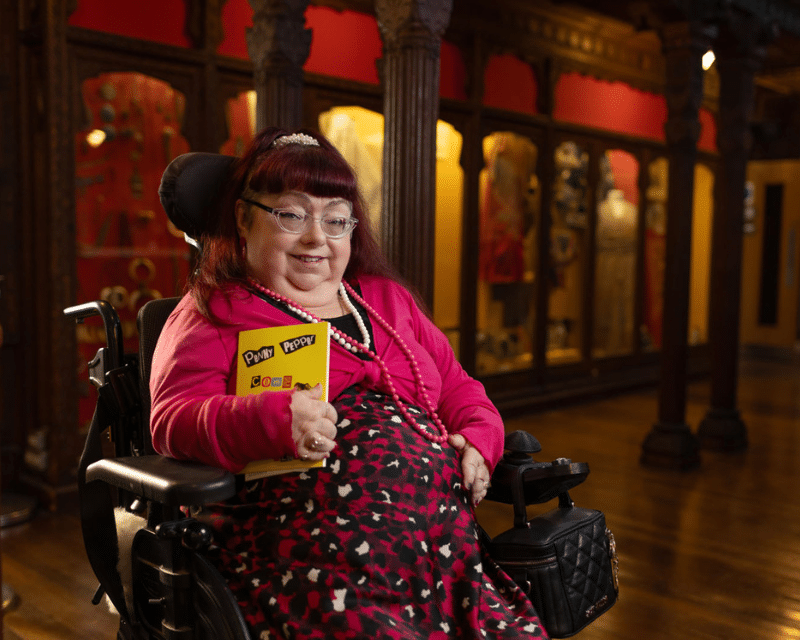
For UK Disability History Month, RLF beneficiary Penny Pepper on the fight for the disability narrative in fiction
My Writing Life: Dreda Say Mitchell
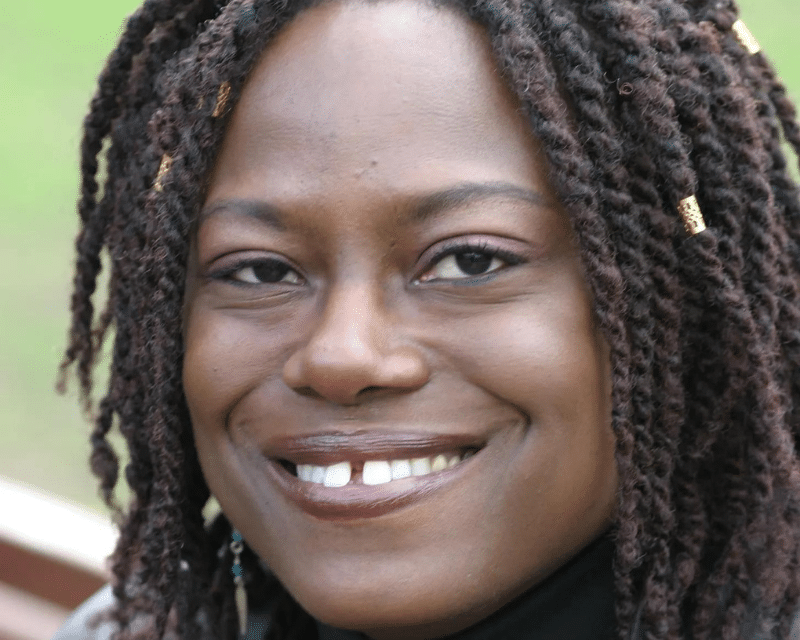
Dreda Say Mitchell is a best-selling and award-winning author appointed an MBE by Her Majesty Queen Elizabeth for her services…
My Writing Life: Anna Ellory
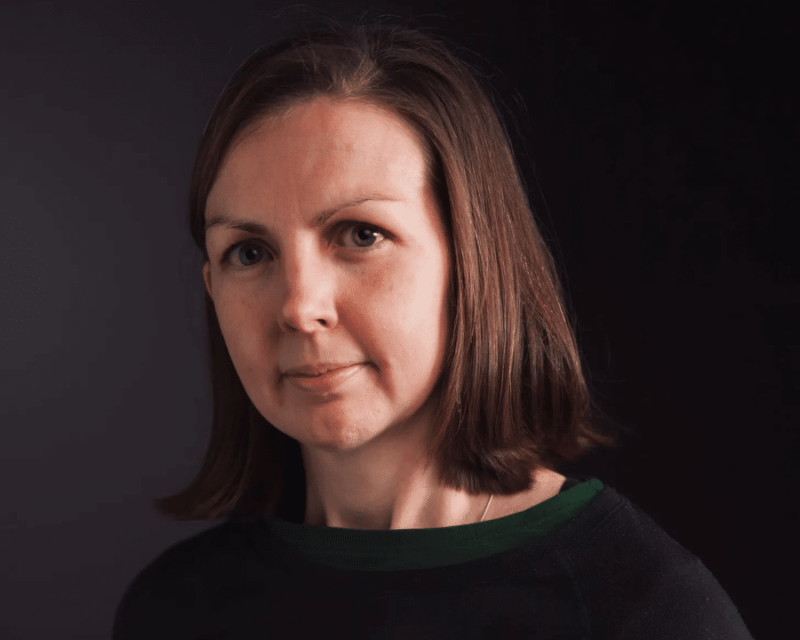
“Once you’ve got a clean sentence, don’t mess with it” – RLF Grants Beneficiary Anna Ellory