
- Collected
- Article
Observing unobserved: Finding feminism where oppression endures
- 4 August, 2025
- Rahila Gupta
For most writers, conducting research is part of the job description, and the relevance of a book can be impacted hugely by the authenticity of its sources. So what happens when you are exploring seminal questions about women’s rights in the twenty-first century, and you experience challenges accessing the very people whose experiences you are seeking to understand?
This was the reality facing Rahila Gupta and Beatrix Campbell, both RLF Fellows, during the research phase of their recently-released book Planet Patriarchy: Global Tales of Feminism and Oppression. Here, Rahila Gupta shares some of the ways in which they managed to speak with people living in some of those areas, uncovering stories that they would go on to explore in more detail in their book.
 They say a week is a long time in politics. Imagine, then, how much might have changed over the ten years it took to research a book exploring the resilience of patriarchy through its articulation with different political and economic regimes: democracy, communism, dictatorship, theocracy and monarchy. While the political regimes are many and varied, the economics of neoliberalism have since swept the world – apart from one revolutionary and very underreported society we found in Rojava, North East Syria, which is based on a cooperative economy.
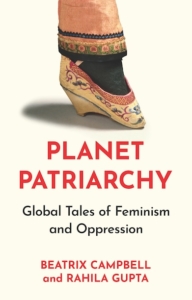
The book I am referring to, my collaboration with Beatrix Campbell, Planet Patriarchy, was published in July. We planned for it to be based on a mix of desk-based research and reportage. In the end, we managed to visit only four of our seven countries. The life-changing, epochal event that was the Covid pandemic scuppered our travel plans. Then, the lurch to authoritarianism in Russia after the invasion of Ukraine; in Saudi Arabia after the ascent of Crown Prince Mohammad Bin Sultan; and in El Salvador, after the election of a Trump-lite dictator, Nayib Bukele, made conditions perilous for journalists – especially freelancers unfamiliar with the terrain – and dangerous for interviewees.
I travelled to El Salvador nonetheless. With my super-cautious daughter acting as interpreter, we maintained the fiction that we were tourists with an extensive network of friends in the country. It would have been easier to invite interviewees to our hotel when we couldn’t find a quiet place to record the conversation, but we were advised not to do so for the classic reason that walls have ears. A fellow guest at the hotel that we were staying at – a Salvadoran returnee from the US – told us her daughter did not come with her because she has extensive body tattoos. People with tattoos are being rounded up on suspicion of being gang members.
Up until Bukele’s election in 2019, gang culture was rife in El Salvador and had eaten away at the fabric of the state. We had chosen it as one of our countries because we wanted to understand whether feminism thrived under a weak state. By the time I visited in 2023, Bukele had thrown more than 1 per cent of the population into his notorious prisons – approximately 81 thousand people – without due process, randomly arresting anyone with tattoos, or anyone looking nervous at the point of arrest. The gangs mostly disappeared off the streets, but freedom from fear of their violence was replaced by fear of sexual harassment from the police. As political dissidents were also swept up in this policy, fear of government colonised the minds of activists. Our interviewees would put their mobile phones at arm’s distance while we talked to them. The Israeli software Pegasus is widely used in surveillance of journalists and activists.
Unless you are praising Bukele, nobody mentions him in public for fear of being overheard. Nicknames such as Don Cerote (Don of Turds) which rhymes neatly with Don Quixote, abound. When whiling away the time in a public square in San Salvador, we got chatting to a local woman who pointed to a couple of soldiers standing nearby and whispered that they might be listening in. And she was a self-confessed admirer of Bukele or, at least, claimed to be! Feminists say they have not seen such a patriarchal government since the 1970s, which has set the tone for ordinary men to behave with impunity and in which women are celebrated only for their role as mothers. Edith Elizondo, who runs a feminist organisation based in Casa de Safo which is a haven with murals, brightly coloured walls and verdant trees, generously offered us a safe and shady meeting space in their courtyard.
I had been very tempted to visit Saudi Arabia. As a theocracy or a theo-monarchy whose version of Islamism was the template for the unadulterated form of patriarchy under ISIS, it was an essential part of our study. To see what the world looked like from behind a face covering and an abaya and, conversely, how I would be perceived, would have provided texture and depth to the research. As a foreigner, I would not have been expected to cover my face, but given my skin colour, I could easily be mistaken for a Saudi woman and shouted at by the religious police for not doing so. By the time I was ready to visit, a pseudo-liberalisation under Crown Prince Mohammad Bin Sultan (pseudo because women still got arrested for being dressed immodestly) had dispensed with a strict dress code and took away one reason for visiting.
The other reason was to interview women in situ. However, UK-based Saudi dissidents advised me that I had nothing to gain from going. No one would speak to me freely in person. If they agreed to do it by Zoom, I might as well remain in the UK. There’s an app called Kollona Amn, which translates as ‘we are all police officers’, which Saudis are encouraged to use to alert the government to anything suspicious. Nadia, one of my contacts, had fallen foul of that.
Our interviewees based in Russia were happy to be interviewed under their own name at the start of the project, but all of them sheltered behind pseudonyms by the end.
Saudi Arabia, along with China and Russia, has thriving, dissident, diaspora communities who collaborated with us, despite the fact that the long arm of the state reaches out to the diaspora in targeted assassinations. China had always been dangerous, and Russia became more so after the invasion of Ukraine.
Until feminist protests against the 2022 extension of war in Ukraine were harshly dealt with, the patriarchy under Putin was more challenged by the campaign for LGBT rights than feminist demands. Women were able to mobilise around domestic violence or abortion rights without attracting the wrath of the authorities. The moment they extended their activism to the Ukraine war and the increased militarisation of Russian society, women began to be arrested like never before. The Feminist Anti-war Resistance claimed a membership of nearly 2000 activists across Russia in the first year, but only 200 activists are reportedly left behind in Russia today. Their online Telegram group, however, has grown to nearly 40,000 members. While protest against the state was always risky, now the right to protest has been criminalised and produces a chilling effect on activism. Our interviewees based in Russia were happy to be interviewed under their own name at the start of the project, but all of them sheltered behind pseudonyms by the end.
 Travel for research is not only dangerous for the reasons outlined above. As freelancers without the support of a large organisation, travelling to a war zone is full of risk. Hefty insurance cover needs to be purchased, which we couldn’t afford. I travelled to North East Syria in 2016 – in the middle of a civil war and a looming ISIS presence – to ferret out the first and only women’s revolution in the world, in a place known as Rojava or its more formal name DAANES. It occupies nearly a third of Syria, and yet very few people have heard about it. I relied on the revolutionaries running the show for my safe journey. It has been the most exciting discovery of my political life and worth all the risks – and to find out more, you will have to read our book.
Planet Patriarchy: Global Tales of Feminism and Oppression (Hurst Publishers), co-written with Beatrix Campbell, is available now.
This article originally appeared on our Substack.
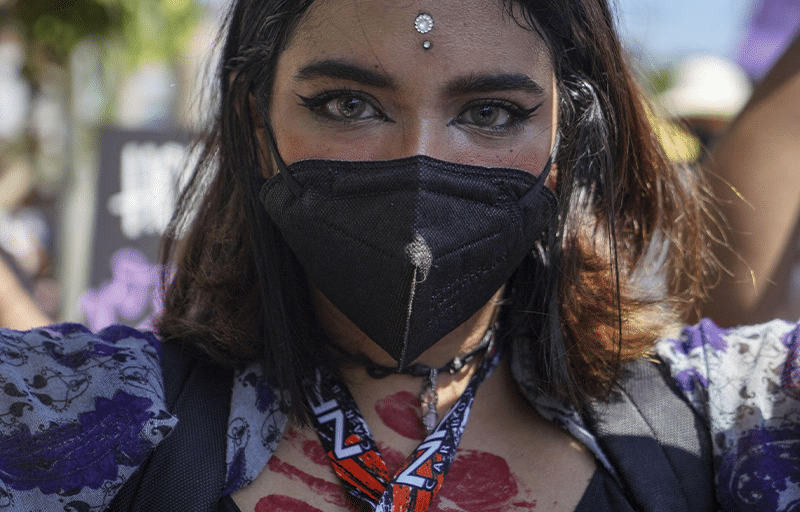
Photo by Camilo Freedman | SOPA Images | Alamy.
You might also like:
Ukraine’s writers at war, and the life and death of Victoria Amelina
Julian Evans on the life and work of Orwell Prize-winning Ukrainian author Victoria Amelina, and the fragmented nature of writing…
Making the work invisible: Trish Cooke on Alterations
RLF Fellow Trish Cooke on adapting Michael Abbensetts’ 1978 Windrush era play Alterations for the National Theatre.
No beach reads here – Summer Trends with Caroline Sanderson
In her final seasonal trends update, Caroline Sanderson looks at what we can expect from the publishing industry this summer…