
- Collected
- Article
A decade on: Matthew Todd on the ten-year anniversary of Straight Jacket
- 18 June, 2026
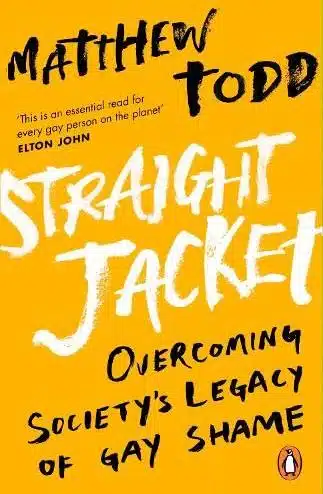
When Matthew Todd’s book Straight Jacket: Overcoming Society’s Legacy of Gay Shame was published by Penguin’s Transworld imprint in 2016, he had been editor of Attitude, the UK’s bestselling gay lifestyle magazine, for 8 years and writing for the magazine for even longer. Before that he worked for Stonewall, the UK’s leading LGBTQ+ charity. But it was in writing about his own personal journey that he really helped transform the conversation about growing up as a gay man in the UK at the end of the 20th Century – and how the shame he felt as a young person impacted his adult life.
Matthew looks back on the journey towards publication and how things have changed (and not changed) in the years since. We also hear from two people working in the field of psychoanalysis about how the book deals with the concept of shame, and why they continue to recommend it to new readers today.
It’s ten years since I published my first book, Straight Jacket, about the mental health struggles some gay people face when they grow up, as many of us do, in shame. Not being able to be myself is something that changed my life.
The book began in 2010, when I was Editor of the UK’s bestselling gay magazine, Attitude. Having gone into recovery for my own issues with drinking, a therapist gave me a book by American therapist Alan Downs called The Velvet Rage. It was the first book I’d ever read which described the specific traumas gay men can experience growing up in a homophobic world. I wrote an article about the book, interviewing a group of gay men who had issues with drinking or drug use as a result of growing up isolated, and we published it in a special ‘Issues’ issue. The edition provoked a huge reaction – in the 20 years I worked at Attitude no other article generated such a large response. Readers were saying I had described their lives in a way no one had before. I decided I had something to say that could advance the discussion and set about finding an agent and publisher.
Part of my own journey of gay liberation is understanding it just is what it is. Trying to change the world single-handedly could kill a person.
But it was not easy trying to get a book about the gay experience published in the 2010s. One agent, a gay man, was deeply offended by the premise and signed off his rejection with the words “Trying to stay happy!” which still makes me a little sad. Eventually, I found Jon Elek – now a publisher – a straight man who felt it resonated with the experience of some of his gay friends. He became my agent, and we got a proposal out to publishers. We had a great reaction and an eventual bidding war. I am not someone who sees prejudice everywhere, but these experiences surprised me. One prospective publisher loved the book but wanted to know why it was focused on gay people and didn’t include straight people’s mental health, something which felt like asking a feminist author to change her work to include men. Another heterosexual editor told me there couldn’t be issues with drugs in the gay community because their receptionist had loads of gay friends and none of them had drug problems. I regret not saying I’d worked at Stonewall and was an award-winning gay magazine editor, but maybe the receptionist should write the book..?
I can laugh about it now, but some of it was deeply painful. I was being vulnerable and honest about my own battle with mental health, and what was happening in the community I’d been working in for decades. To have outside people tell me I didn’t know what I was talking about affected me more than I understood at the time.
I finally signed with the nice people at Transworld, and Straight Jacket came out in June 2016.
The book was a big success. Prince William appeared on the cover of Attitude and talked about the need to stop homophobic and transphobic bullying. Some media took an interest. I was on the cover of the Observer magazine, on the TV show Lorraine with Lorraine Kelly – someone who continues to be an authentic friend to LGBTQ+ people – and appeared on Newsnight and Women’s Hour. But we didn’t get as much coverage as you might have expected, considering the reaction from the gay public. The mainstream media has one positive story to tell about gay people. It loves comics, drag queens and TV hosts because we are great for a laugh, but real issues, such as the complicated way trauma manifests in this community, doesn’t fit with what the sometimes well-meaning, often largely uninterested, mainstream media wants to understand.
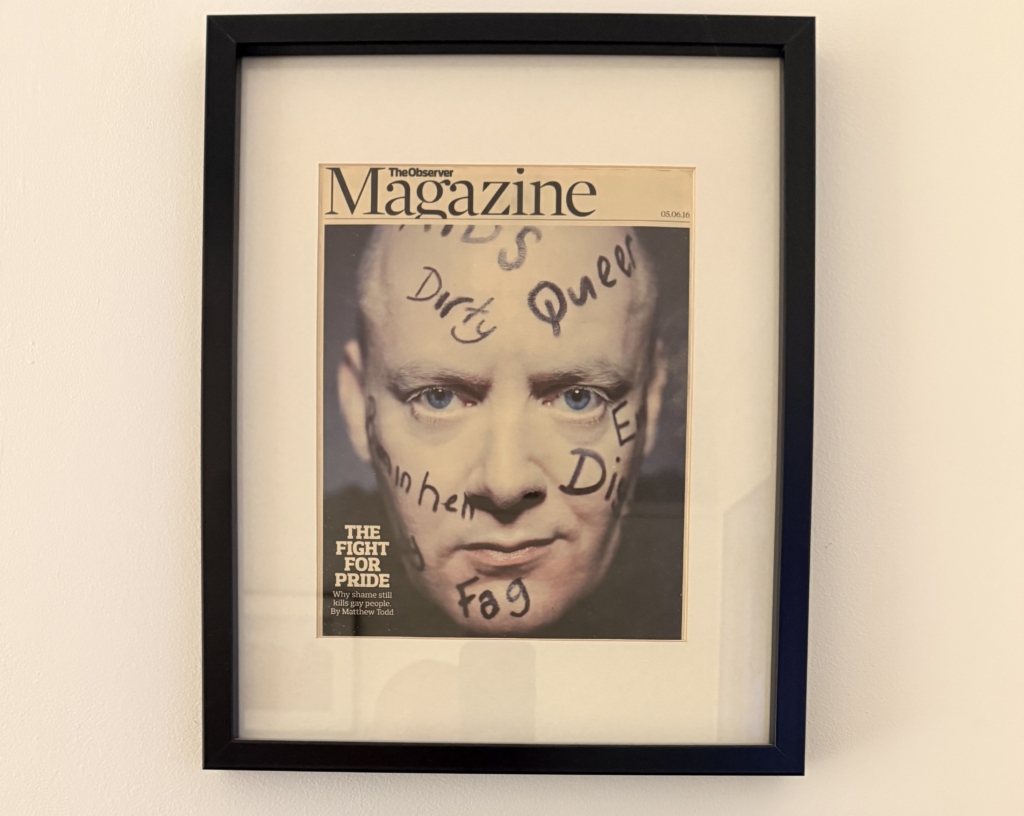
The Observer cover story from 5 June 2016 included a confronting image of Matthew with homophobic slurs written on his face. This framed copy of the cover hangs on Matthew’s mother’s living room wall. Original photography © Chris Floyd/The Observer.
More importantly, the reaction from the gay community was enormous. Readers called the book important and groundbreaking. I received hundreds of messages saying it had changed lives. Movingly, one young man I remember passed me thanks from his parents for saving his life by helping him get off drugs. Sir Elton John called it “an essential read for every gay person on the planet”. It won two awards, and I was given the Freedom of the City of London.
It was an amazing experience and a real privilege to do talks up and down the country and engage with so many people.
Straight Jacket came to me through a therapist when I was trying to make sense of my own life. Reading it felt like being recognised, not just in terms of my own story growing up, but in understanding the community I had entered as a young gay man, which was not always the place of belonging I had hoped for or expected. The book helped me understand why. Shame does not stop at the individual. It shapes how a community operates, how people relate to each other, what gets acted out and what stays hidden. That was as illuminating as anything about my own history. I now work as a therapist, and I still recommend it regularly. The book is now a decade old, but the patterns it describes are ones I continue to see. Some things have changed, and those changes matter, but the underlying dynamics the book identifies have proved remarkably persistent.
Adrian Stones, Psychotherapist
Ten years later, the issues I wrote about in Straight Jacket are sadly still rife. I was very sad to hear about the death of popular drag performer The Vivienne last year from a Ketamine overdose. Homophobic violence rages on. Just in the last few months, we’ve seen a man nearly killed in a suspected homophobic attack in Bristol. In my whole life, I’ve only ever seen one mainstream documentary about homophobic violence, even though such hate crimes are increasing. It’s disturbing to see the growing backlash against LGBTQ+ people following the election of Trump. Diversity has become a dirty word. The relentless hatred of trans people is frightening. Once again, the discussion has been led and defined by straight people, a number of whom seem adamant that they know more about our lives than we do.
Although there are lots of people who have been wonderfully supportive, gay and straight – organisations like the Royal Literary Fund and many others – I don’t think many people in the publishing industry realise that Straight Jacket was one of the highest profile and successful non-fiction gay-themed books of the last 30 years. It was never translated, despite lots of people across Europe asking me about it. I was delighted to write a follow-up book called Pride: The Story of the LGBTQ Movement (2019), celebrating the 50th anniversary of the Stonewall riots for Welbeck, but no other publishers approached me. Of course, today there are more books published with LGBTQ+ themes, but it’s still a hard industry for gay and trans voices, especially if they do not have a literary prize-winning tone or are not middle class. It’s sad, as there is a big market for more work like this. One of the reasons Straight Jacket was so well received, I believe, is because there are so few gay titles published by authors who have significant experience and know what they are talking about. But part of my own journey of gay liberation is understanding it just is what it is. Trying to change the world single-handedly could kill a person.
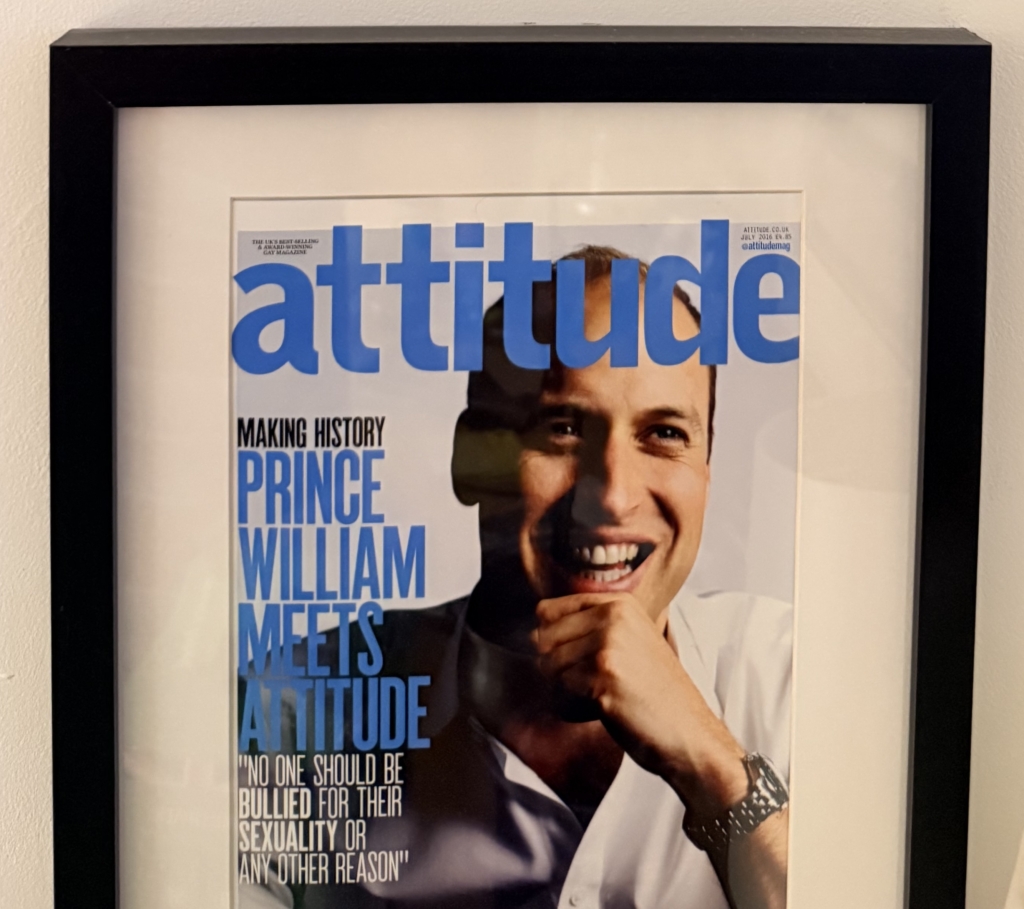
Matthew’s mother also had a framed copy of Attitude’s groundbreaking July 2016 issue, featuring Prince William – the first time a member of Royal Family had ever been photographed for the cover of a gay publication – in pride of place on her living room wall. The edition was Matthew’s final project as Attitude’s Editor.
For myself, in the years since publishing Straight Jacket, I’ve thrown myself into climate change activism. I have had a period of ill health and sadly lost my dear, darling mother very recently. She was the one who instilled in me the importance of standing up for who you are and stating your truth in the first place. She came to the launch of Straight Jacket and to various Waterstones events. (I love you, mum.) I’m now working on a new non-fiction book and a novel, which I’m very excited about.
Reflecting on my experiences, the positive takeaway is that the seal is broken. The problems of growing up gay, isolated and unsupported are being talked about more. LGBTQ+ people are finding ways to support each other online and in the real world.
And for all the negatives, writing and publishing Straight Jacket was an incredible experience and one I wouldn’t have had without the support of Jon Elek, the agent who took me on; Brenda Kimber, my editor; the staff at Transworld; Lorraine Kelly; Eva Wiseman at The Observer, who put me on the cover; and everyone else – gay and straight – who helped get it out there. The ultimate point of Straight Jacket is that division is bad for everyone, and helping one section of the community helps all of us.
I’m most grateful to everyone who bought the book, and especially to those who said it helped them. Having even a small positive impact on the lives of people I don’t know has been one of the most rewarding experiences of my life, for which I will be forever grateful.
Straight Jacket remains a deeply important and timely book, for the LGBTQ+ community and society more broadly. Todd’s psychologically informed depiction of the gay experience offers a comprehensive and compassionate perspective on the many factors that shape identity, belonging, and wellbeing. His exploration of shame is particularly powerful, illuminating its often-hidden impact and the transformative potential of acceptance, authenticity and inclusion. The message of the book is as critical now as when it was published, with a much-needed message of hope of what’s possible when gay people have the safety and freedom to be themselves.
Una Reynolds, Psychologist
Matthew Todd is a British writer, editor, and occasional stand-up comedian. He is the author of Straight Jacket: Overcoming Society’s Legacy of Gay Shame, a non-fiction title published by Bantam Press in June 2016; the play Blowing Whistles, which has been performed in London, Australia and the United States; and Pride: The Story of the LGBTQ Movement (2019, Welbeck). He was the editor of Attitude magazine between 2008 and 2016, for which he won three British Society of Magazine Editors awards. In June 2016, for his last issue as editor, Prince William sat for the cover of Attitude, the first time a member of the royal family had appeared in a gay magazine. He is also an RLF beneficiary.
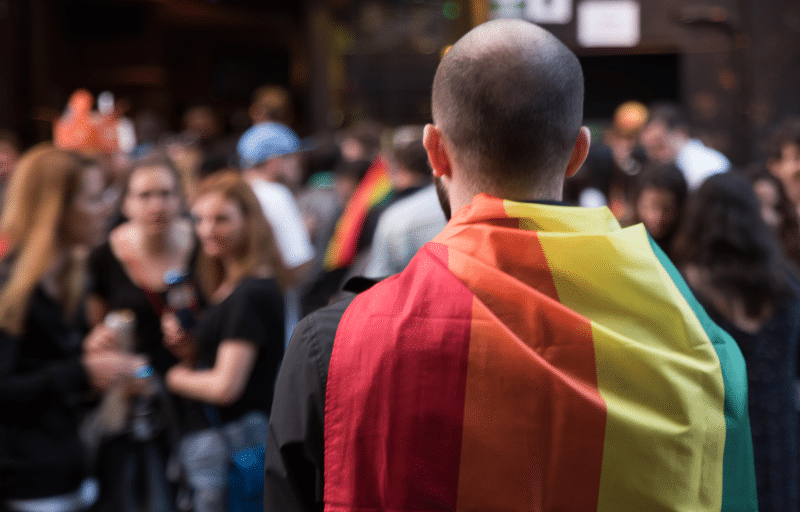
Image: Pride in London, 25 June 2016 © Stefano Padoan, Alamy UK.
You might also like:
“Against this backdrop, I wrote and I wrote…”
For UK Disability History Month, RLF beneficiary Penny Pepper on the fight for the disability narrative in fiction
Telling other people’s stories: a writers’ responsibility
Adam Weymouth – an RLF beneficiary and author of Lone Wolf – on slow travel, learning to listen, and the…
Why we need literary pride
This Pride Month, RLF Fellow and Heartstopper story consultant Wren James on the importance of queer representation in books.