- RLF News
- Article
My Writing Life: Kerry Young
- 15 June, 2026
Kerry Young is a critically acclaimed author known for her evocative storytelling and richly drawn characters. Her novels, including Pao, Gloria, and Show Me a Mountain, vividly capture the complexities of identity, heritage, and history. Young’s work explores the intersections of culture, politics, and personal struggles, drawing readers into the heart of Jamaican society. With a unique voice that blends authenticity and literary elegance, Young has established herself as a powerful force in contemporary literature, offering narratives that resonate with readers across the globe.
1. What book should every writer read?
I don’t think there is any ‘should’ about it. I think we owe it to ourselves to read books that inspire us and from which we learn about the things we honour and cherish. For me, this book is The Heart of the Buddha’s Teaching by Thich Nhat Hanh, which I have read repeatedly over the years. It reminds me of what’s important to me, the person I aspire to be and the personal qualities I’m seeking to cultivate. It helps me to feel confident that my fictional characters and stories reflect my values and the compassion I feel for the human condition.
2. What is your typical writing day like?
My writing days are scheduled alongside the other activities that fill up my week. A writing day takes up a full day, so on writing days, I just write. My target is to write a chapter in a day. That’s about 3,000 words for me. I write 2 chapters long-hand, and then I spend a day typing up and editing.
3. Who has been an influential figure in your writing career?
Helen Garnons-Williams, when she was my editor at Bloomsbury. Helen believed in my ability to understand her feedback and rewrite as necessary. Those are the two most important skills for a professional writer because they help you shape your story and create depth and texture in your characters and narrative.
4. What is the one thing you wish someone had told you before you started your career as a professional writer?
I wish someone had told me that I showed promise as a writer. As it was, I received mostly discouragement. One course tutor actually said, “You obviously have a way with words, but do I see any talent? No, not really.” Another told me that my writing was “pedestrian.” That I persevered in producing Pao was, I think, something of a miracle. The result of my dogged determination to create a gift for my father of a life longer and better than the one he’d had, having died in 1969 at the age of 47.
5. What is the best advice you’ve ever received about your writing?
After drafting three or four versions of Pao I sent it to The Literary Consultancy (TLC) for a professional assessment. The manuscript was read by Christopher Wakling, whose detailed and invaluable report enabled me to make the revisions that led to the version Helen would later buy at Bloomsbury. When his annotated copy was returned to me, Christopher had included a handwritten postcard to the effect that “given the vagaries of the industry,” my book might not see the light of day, but he hoped it would. That was the first positive encouragement I had ever received about my writing. Little did I know at the time how exceptional it was for him to communicate with me directly like that. It was years later, when I became a TLC Reader myself, that I fully appreciated how extraordinary that was. I met Christopher when, in 2014, I became a Fellow on the Royal Literary Fund Fellowship Scheme, and a few years after that, he and I co-tutored on an Arvon Foundation course. I couldn’t believe my luck to have come across him. Without Christopher, I might well have given up.
6. What has been the proudest moment of your career so far?
Bloomsbury deciding to publish Pao because, having written a lot of non-fiction, my aspiration was to write a work of fiction that someone wanted to publish, and I had achieved that. Not only as a gift to my father but a gift to Jamaica and Jamaicans to represent the island and its people in ways that reflect our beauty, humanity and the courageous ways in which we deal with the circumstances in which we find ourselves. That is a representation of Jamaica that is not always prevalent in the ways we are written about and thought of.
7. What are you reading right now?
The Art of Living by Thich Nhat Hanh. Also, Your True Home – the everyday wisdom of Thich Nhat Hanh – 365 daily readings. Both of these books remind me of who I am, the path I have chosen towards happiness, and the need to be present in the moment, grounded and free, in order to be able to achieve this.
8. Bookmarker or page-folder?
Book marker. I don’t like to see a book marred by dog-eared pages, broken spines or writing in the text or margins. It seems disrespectful to me.
This article originally appeared on our Substack.
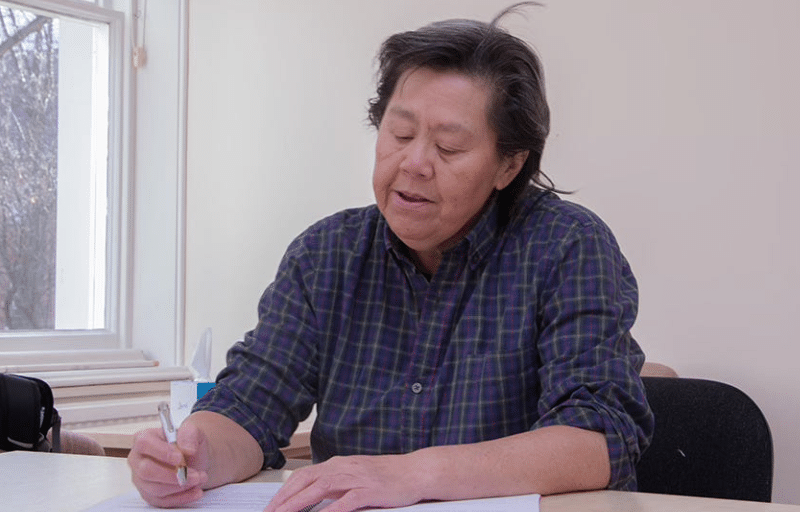
Image shows Dr Kerry Young at the New Dawn New Day workshop. © Lealle Brady.
You might also like:
My Writing Life: Craig Brown
“I remind myself each day that being a writer is better than the alternatives.” – Author and journalist Craig Brown.
My Writing Life: Lisa Parry
“It’s so important to take the time to make a script the best it can be before letting anyone else…
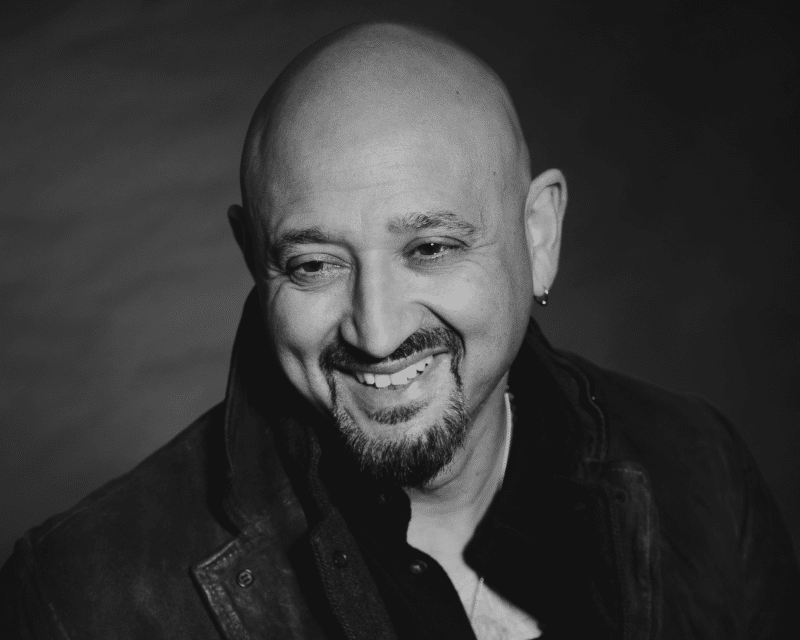
My Writing Life: John Siddique
“Dear God, page-folding is deserving of capital punishment. Bookmarks all the way down.” John Siddique on his writing (and reading)…