- Collected
- Article
Doing it for the Kids: Children’s authors and the trouble with altruism
- 5 March, 2026
- Karen McCombie
Statistics released recently in connection with this year’s National Year of Reading show a significant drop in reading enjoyment and frequency among children. For RLF Fellow and children’s author Karen McCombie, these issues are concerning but not particularly surprising – and for children’s authors in general, they also reflect a growing conflict: the difficulty of making a living within this challenging publishing landscape, whilst also supporting initiatives to get children reading.
As schools, parents and children across the UK prepare to celebrate the magic of children’s literature for today’s World Book Day, Karen gives us an insight into what it is like to be working as a children’s writer today.
 And so it begins…
The National Year of Reading 2026 is well underway. Instigated by the Department of Education, and led by the National Literacy Trust, the campaign came about after statistics revealed a huge slump in reading for pleasure in the UK population over a 20-year period. The push to get people reading again is supported by everyone from the Big Five publishers to tiny rural primary schools, from sports stars to celebrities, from the Royal Literary Fund to the Queen’s Reading Room charity.
The campaign is aimed at the whole population with even the HM Prison and Probation Service getting onboard, but inevitably the main focus is on children. After all, get bitten by the reading bug as a child, and you’re very likely to be a reader for life. Specific statistics for this cohort are enlightening as well as depressing. According to a recent study by the National Literacy Trust, reading enjoyment amongst children and teens (aged 8-18) in 2005 stood at 68.7%, but by 2025 that had dropped to 32.7%. When it came to reading frequency, the daily reading habit had slipped from 38.7% to just 18.7%. More disappointingly still, a recent research project by HarperCollins UK found that while 64% of children aged 0-4 were being read to frequently in 2012, that number had fallen to 41% by 2024.
Whether it’s authors like me who’ve been around a long time, or younger debut authors, we all agree that having to know about fronted adverbials is a killer to freely enjoying stories for their own sake.
What’s behind the figures? It’s no surprise that the lure of technology and social media bear the brunt of the blame. Another issue currently being studied by Nottingham Trent University, in conjunction with the University of Minnesota, highlights the fact that many parents interpret the act of reading to their children as an ‘educational task’ rather than something fun, bonding and comforting. In other words, a chore.
The viewpoint of these parents certainly chimes with the chat in children’s author groups I belong to. Discussions have pointed the finger at many schools’ preference for reading scheme books rather than free choice, so what’s brought home may be seen as a worthy ‘educational’ option than an enjoyable activity. It’s also been mentioned quite vociferously that since 2011, when then Minister for Education Michael Gove decreed that the teaching of subjects such as English should be more ‘rigorous’, there’s been a shift to pummelling primary age children with the sledgehammer of intricate grammar rules and the testing of that knowledge. As a child of the 70s, I feel lucky that the focus then was about learning grammar by osmosis; by listening to, sharing and reading stories, absorbing sentence structures by immersion and not almost by rote. Whether it’s authors like me who’ve been around a long time, or younger debut authors, we all agree that having to know about fronted adverbials is a killer to freely enjoying stories for their own sake.
I mention these chats in (private) children’s author groups to show that while we aim to write the best books we can and earn a living from it, we are all undoubtedly invested in children’s lives and literacy. Outward-facing, you’ll see us on social media, talking about our own books, naturally, but also – and more often – recommending other authors’ books to various gatekeepers of children’s reading options. How amazing it is to work in a creative world, while being able to do actual good in our field.
However, this altruism can be a heavy load. Prior to the recession of 2008/2009, many children’s authors had a full-time – if not necessarily particularly lucrative – career. Book advances from publishers accounted for the main part of our earnings, but school and library author visits were another income stream, with the added option of children buying personally signed copies to treasure, which in turn helped support our work. It felt that our right to earn a living from children’s books sat comfortably with our altruistic concern for our audience.
We children’s authors will always care, and we’ll always do our best, but nowadays this altruism is coming at a cost.
After that period, the landscape began to change. Many publishers offered half the advances they had previously. School and library budgets were slashed. Invitations to visit and inspire children dwindled. As for making a living as a full-time author, that’s very much a rarity now – most authors have a day job to pay the bills.
What hasn’t changed is the consideration children’s authors feel towards young people. We value the keen readers, while encouraging the struggling and reluctant readers. We think about their circumstances and life experiences. We understand their need to see themselves represented in fiction, as well as being aware of how beneficial it can be in terms of empathy to walk in other’s shoes within a story. Ultimately, it’s a no-brainer; we children’s authors will always care, and we’ll always do our best, but nowadays this altruism is coming at a cost. Increasingly, we’re expected to work for nothing; to do it for the kids. An enthusiastic invitation arrives from a school, and nothing comes of it after you mention a fee and travel costs. Or we have a visit confirmed but are told that our books won’t be offered for sale, as it’s not fair on children whose families can’t afford them in the current climate. In addition, requests regularly arrive from cash-strapped schools asking for free copies of our books, or we’re asked to do a ‘short’ inspirational video about x, y and z for free. Now that the National Year of Reading has arrived, these requests have ramped up considerably, as I’m seeing from both my own inbox and friends’ posts on author chat groups.
I think I can safely say we children’s authors are torn. If we could, we’d be right there, giving it our all. To coin the National Year of Reading slogan, we’d go all in. But clearly, the hard truth is that the vast majority of us don’t earn shiny amounts of money from our beloved career, or have – literally – the free time to fulfil requests.
One beacon of hope on the horizon is the recently announced Children’s Booker Prize from The Booker Prizes. The inaugural award, with a hefty £50,000 prize, opens to submissions in spring 2026. The winner will be announced in February 2027, after being selected by a panel of both child and adult judges chaired by UK Children’s Laureate Frank Cotterell-Boyce. At least 30,000 copies of the shortlisted and winning books will be gifted to children.
Here’s hoping that the push of the National Year of Reading and a prestigious Booker Award will go some way towards changing the creeping perception of children’s authors being benevolent and comfortably well-off aunties and uncles to that of actual creators who should be valued, both in terms of talent and funding.
In the meantime, despite our squashed and squeezed financial and time constraints, of course we children’s authors will absolutely keep on doing it for the kids.
This article originally appeared on our Substack.
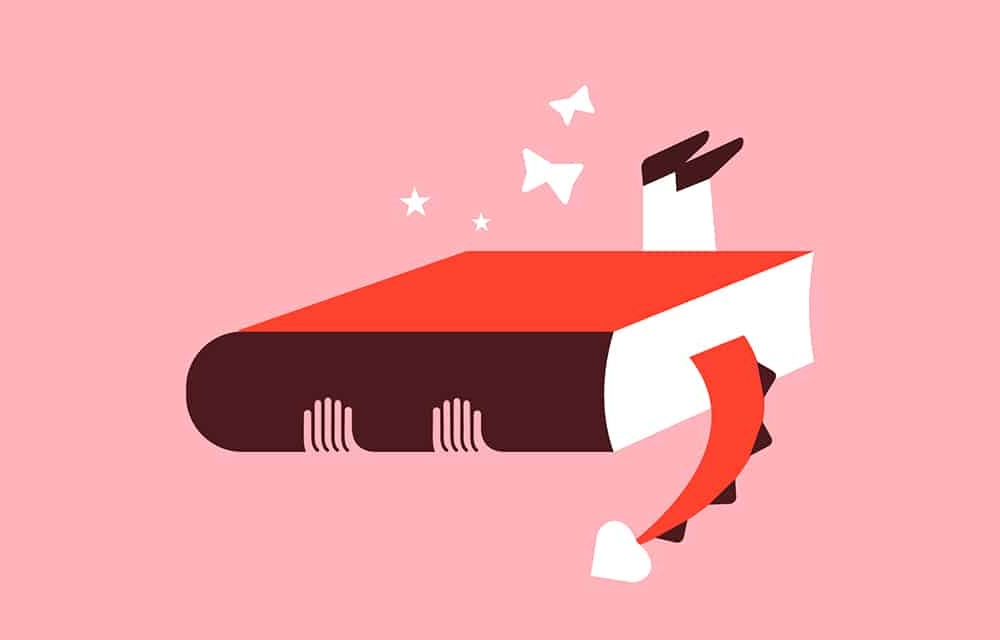
Illustration by Jennifer Tapias Derch.
You might also like:
Bridge, our school workshops programme
“We’re in the transformation business.” RLF Fellow and poet Donny O’Rourke on Bridge, our school workshops programme.

Eleven things I’d tell myself as a young writer
“Read well and read wide.” – Robin Etherington. RLF writers on the advice they would give to their younger selves.
AI and the future of the novel
Simon Okotie on how the novel has always been an appropriative technology – and why the advent of AI is…