- RLF News
- Article
My Writing Life: Michael Symmons Roberts
- 9 March, 2026
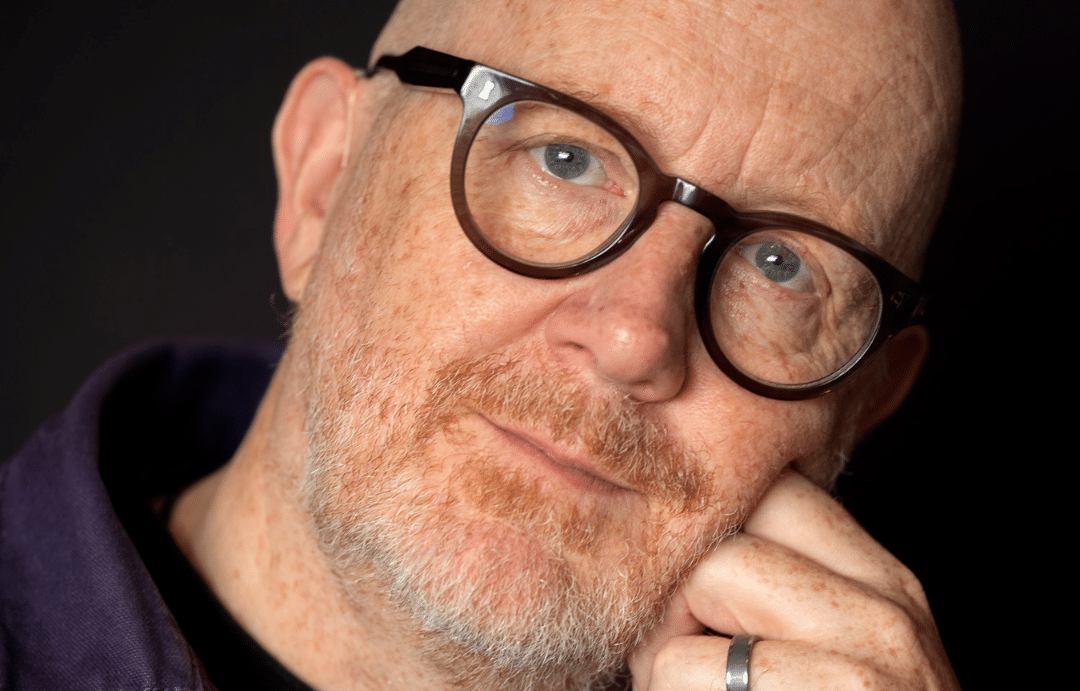
Michael Symmons Roberts is a British poet, born in Preston, Lancashire in 1963. As a librettist, his work with composers has been performed in concert halls and opera houses around the world. He is also an award-winning broadcaster and dramatist, Professor of Poetry at Manchester Metropolitan University and a Fellow of the Royal Society of Literature. His latest book – Quartet for the End of Time – was published by Cape in 2025, and his ninth collection of poems – Dog Star – will be published in early 2026.
1. What book should every writer read?
There were so many inspiring and formative books for me, and I’m still finding them. But for insights into how, why, where and when writers do what they do, how they started out and how they keep going, then for me it’s hard to beat the Paris Reviewinterviews. They have been going for 70 years and counting. Their archive holds hundreds of interviews with writers from Ernest Hemingway to Elizabeth Bishop, Joan Didion to James Baldwin, Harold Pinter to Toni Morrison. Their paperback selections – around twenty interviews per book – were regular reads for me when I was starting out, and I still dip into them now.
2. What is your typical writing day like?
I have in my head a platonic form of my writing day, in which I do four hours of distraction-free writing in the early morning, followed by a workout, reading for research, reading for pleasure… But in truth, most of my work is in poetry, and poems tend to resist the novelists’ ‘x hours a day, every day’ method. I know some poets who write daily, but I have days when I can’t stop writing, and days when I can’t start. I’ve learned to accept the unpredictability of that, at least when writing poems. In other forms – nonfiction, scripts, words for music – I can get into more of a daily routine, and a deadline helps to focus the mind.
3. Who has been an influential figure in your writing career?
I didn’t know any writers when I was growing up (wasn’t sure poets still existed) but knew I wanted to write. Like a lot of writers, I had an inspirational English teacher at my comprehensive school who made poems light up on the page as we were reading them in class. When I was about 15 I showed him a (terrible) poem I’d just written, and he went through – line-by-line – saying ‘that’s a cliché, that’s a cliché… etc, then got to one line and said ‘that’s a great line, that’s you’. I’ve always been grateful that he took my desire to write seriously enough to critique it honestly, and to pick out something to build on. It would have been much easier for him to say it was wonderful but I wouldn’t have believed him.
4. What is the one thing you wish someone had told you before you started your career as a professional writer?
Lots of things, though I don’t think anything would have put me off. I’ve always had a day job, as most poets do, but increasingly it’s true of novelists, playwrights and many other writers, as it’s harder than ever to make a living from writing alone. I wish I’d been told that the writing itself doesn’t get any easier, but this is what makes it the best work I can imagine doing. The poet Robert Graves (in his Paris Review interview) said ‘a perfect poem is impossible. Once it had been written, the world would end.’ So, in the meantime, we can keep pushing at it.
5. What is the best advice you’ve ever received about your writing?
Finish the first draft.
6. What has been the proudest moment of your career so far?
The moment of greatest joy (I’m not sure about pride) in my writing life came in my twenties – at the end of a bad day at work – when I picked up a voicemail from a publisher saying they wanted to publish my first book of poems.
7. What are you reading right now?
Claire Tomalin’s biography of Thomas Hardy, Lamorna Ash’s Don’t Forget We’re Here Forever and Tishani Doshi’s ‘Egrets, While War’, all for work and pleasure.
8. Bookmarker or page-folder?
Both, plus yellow post-it tabs. I write in books too, but only in pencil.
This article originally appeared on our Substack.
You might also like:
My Writing Life: Kiran Millwood Hargrave
Kiran Millwood Hargrave is a poet and novelist. Her debut, The Girl of Ink & Stars, won the Waterstones Children’s…
My Writing Life: Ian McEwan
“Recognise the intense pleasure and privilege of living by one’s writing.” – Ian McEwan
My Writing Life: Cerrie Burnell
Children’s author, actor and activist Cerrie Burnell – who is also an RLF grant beneficiary – on her writing life…