
- Collected
- Article
From first draft to final edits: Abigail Avis on writing Wet Ink
- 16 March, 2026
- Abigail Mann
For many writers, getting a book deal is hard enough – but have you ever wondered what happens after the ink dries on that much-coveted contract?
Over the next few months, Abigail Avis – who also writes as Abigail Mann – will take us behind the scenes as she navigates the run-up to the publication of her new novel, Wet Ink, described as a “striking, smart and sensual bookclub novel.” From drafting the book while pregnant to juggling publishing deadlines, Zoom calls and meetings, and the everyday reality of parenthood, Abigail will share the process with us as we countdown to the publication of Wet Ink in 2027.
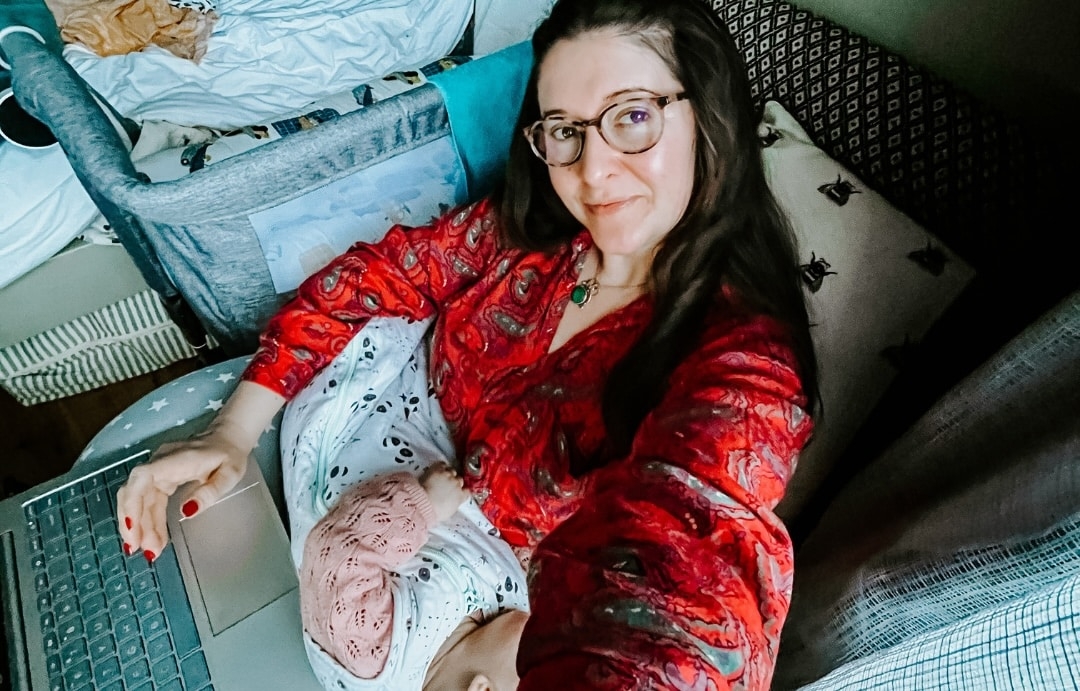
 Last year, my life changed exponentially, twice. The first time was in August, 2025, when my second daughter was born at the tail end of a heatwave. The second was in October, when the book I wrote sold at auction in the UK, the USA, a further seventeen territories, and to a TV production company, all in the space of a few weeks. In isolation, each of these events would be enough to feel like my world had tilted on its axis, but there was something uniquely surreal about them happening simultaneously. It turns out that living with a newborn, a toddler, and having to talk with some semblance of coherency about your novel across time zones is a pretty wild way to enter the postpartum period. We’ll get to that, I promise, because I’m going to be documenting the journey of my novel as it winds its way to publication over the next year. For now, I’m going to dial back and tell you about how and why I wrote Wet Ink, my debut book club novel that will be published in Spring 2027.
To start with, you must know that I am no stranger to the world of publishing. Over the past eight years, I wrote, felt joy, and grew jaded as an author. Things have not been easy. I struggled to afford nursery when my first baby was seven months old. I wrote a novel to length and then abandoned it in the throes of early motherhood because it just did not work. Or perhaps, most accurately, I did not work anymore. I seriously questioned whether having a baby broke my brain, and again questioned whether it was possible to sustain any kind of writing life when my ability to concentrate was in constant competition with the urge to sleep. Becoming a mother has been the greatest and most unexpected joy, but it has altered me at every level, not just through the pragmatics of getting words down on the page, but what kind of story I actually want to tell with the increasingly limited time I have. By the time I managed to – somewhat – detangle myself from my wonderful, fierce daughter, I realised that I owed it to her, and myself, to be braver with my writing. The thing that held me back was stressful and mundane. It all came down to finances.
Becoming a mother has been the greatest and most unexpected joy, but it has altered me at every level, not just through the pragmatics of getting words down on the page, but what kind of story I actually want to tell with the increasingly limited time I have.
I think this is important to say, because there is a lot of terrible writing advice out there, a one-size-fits-all approach to success that made me choke on my coffee as I reflected on how badly it related to my own life. Write for one hour every day. Curate a dedicated writing desk. Block out time alone in your week to write. “The bliss of solitude”, as Wordsworth writes, was a foreign land to me. I have always worked alongside writing, but trying to squeeze it all in – motherhood, working, writing – often felt frantic, like I couldn’t do any one thing very well. Then, two things changed that helped me to writeWet Ink. Boredom, and my RLF Fellowship at the University of Greenwich.
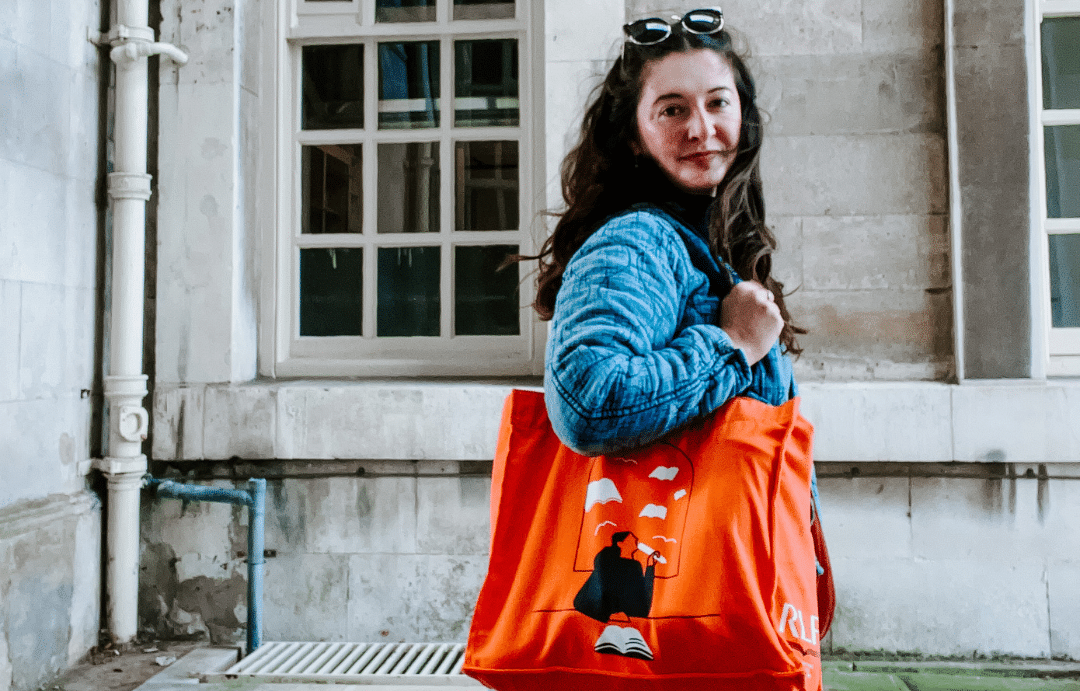
Abigail at the University of Greenwich
The first is important because boredom really is underrated, and although it doesn’t feel like an efficient use of time, it was pivotal for me. My story, about Mitzy Barlow, a bored housewife in 1969 London who writes and delivers erotic fiction inside the Tupperware containers she sells at parties, is a story that came to me during midnight hours nursing my baby, when I couldn’t do anything but sit and think. Over time, I added scenes each night until the moment came, months later, when I wrote it down as a rushed outline on paper. I did not follow a beat sheet, but I did slowly add bricks to the idea until it felt stable enough to stand up on its own. Then, my RLF Fellowship allowed me to put meat on the bones of that idea without worrying quite so much about how to pay the bills. For the first time, an organisation unquestionably understood that, for mothers to write, they need support. In order for me to take a leap of faith with a new novel, I needed that safety net beneath me.
It turns out that living with a newborn, a toddler, and having to talk with some semblance of coherency about your novel across time zones is a pretty wild way to enter the postpartum period.
Disappearing to my tiny office in Greenwich was like one big, long breath out. Students would book in to see me, and between those tutorials, I would add words, on the quad, on the train, in doctors’ waiting rooms, anywhere and everywhere I kept adding to the manuscript. At 30,000 words in, I stopped for a week to check in on the direction of the outline, and at the same time realised I was pregnant. I had been here before and knew that if I didn’t finish the book before I gave birth, I wouldn’t finish it for another two years. I didn’t want to wait that long. The momentum of the academic year and my ever-protruding belly kept me going until I finished the manuscript. I like a hard deadline, and this one was as hard as it gets.
There is a book that I kept coming back to during this time, like a sage pal in my pocket who had been there before. The Baby on the Fire Escape, written by Julie Phillips, which collects the accounts of artist mothers, and, as she terms it, the Mind-Baby Problem. Here was evidence that I could write, could finish this book that had so much to say about desire, the female gaze, and what it means to live as yourself, as a writer, and as a mother:
Alice Walker saw her daughter in her mind’s eye as she worked, “the lonely sucking of her thumb / a giant stopper in my throat…” Imagine Naomi Mitchison in a London park, writing on a board balanced on her pram. Think of Shirley Jackson making plot notes in the kitchen while dinner was on the stove; Toni Morrison driving to work with a pad of paper in the car so that she could write whenever the traffic slowed. Here the act of writing is not continuous but provisional, contingent, subject to disruption—and yet the words are still coming and the work is getting done.
The Baby on the Fire Escape, Julie Phillips, 2022
I finished Wet Ink a week before I gave birth. I wonder sometimes whether my daughter held on until I was ready. Within weeks of her arrival earthside, she was coming to meetings with me at publishing houses, and I lost all sense of what was normal, but we’ll save that for next time, shall we?
This article originally appeared on our Substack.
You might also like:
Doing it for the Kids: Children’s authors and the trouble with altruism
Karen McCombie on the challenges of writing for children, when the art of reading is itself facing challenges.
“Against this backdrop, I wrote and I wrote…”
For UK Disability History Month, RLF beneficiary Penny Pepper on the fight for the disability narrative in fiction

Telling other people’s stories: a writers’ responsibility
Adam Weymouth – an RLF beneficiary and author of Lone Wolf – on slow travel, learning to listen, and the…