
- Collected
- Article
Going all in on Dads reading – and being inspired by a “silly old bear”
- 29 June, 2026
- Jim Beckett
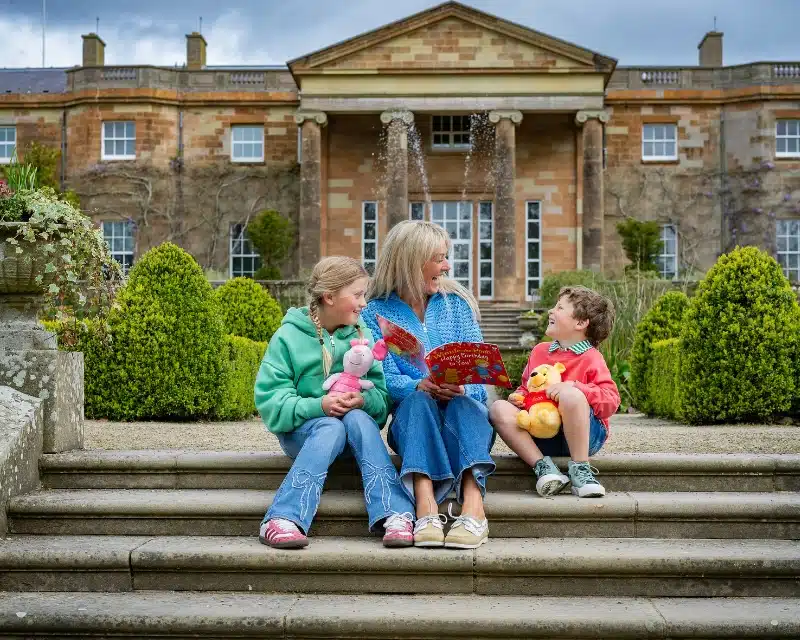
Last year, Jim Beckett was one of a number of writers to take part in Disney’s Winnie-the-Pooh’s Hunny Hunt, a celebration of storytelling at Hillsborough Castle and Gardens in County Down, Northern Ireland. The original Winnie-the-Pooh stories were written by RLF benefactor AA Milne, and this year marks 100 years since the first Winnie-the-Pooh book was published. 2026 is also the National Year of Reading, a campaign led by the National Literacy Trust.
But amidst all this celebration, there is a serious issue: a decline in reading for pleasure which means, among other things, fewer children cuddling up with a bedtime story. With fathers reportedly even less likely to read than mothers, Jim takes a look at what we know about AA Milne and his son, Christopher Robin Milne, to explore an earlier version of this same challenge – and the power of a good story.
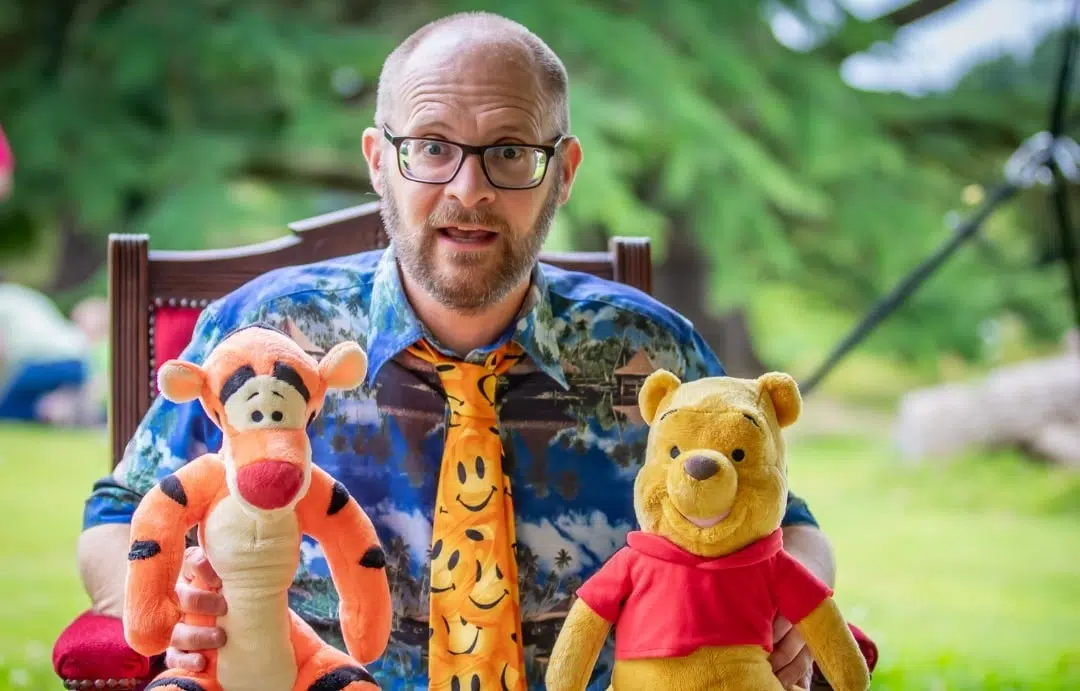
In a shady spot within the manicured grounds of Hillsborough Castle, a bear of little brain is stuck in Rabbit’s front door after a Hunny Hunt up a tent pole. Tigger is bouncing to the rescue, rather than Christopher Robin, because the teddies are helping me to tell the story today and Tigger has the best song. Some of the giggling children in the audience are in full Pooh and Piglet costumes, while others are venturing into the Hundred Acre Wood for the first time; the wonderful thing about AA Milne’s characters is their instant familiarity to each new generation. My fellow storytellers are the Disneyfied descendants of those famous cuddly toys from Harrods (once loved by a famous boy and now on permanent display in the New York Public Library) but a century later, Winnie-the-Pooh is the same silly old bear he ever was.
It’s best to keep things lively for a younger crowd, even in a relaxed setting like Owl’s Book Corner. When visiting schools, I always pack my ukulele and my orangutan. Author events are great for creating a buzz around books, but they’re no substitute for protected story time: a daily slot on the timetable when the teacher reads aloud to the class for enjoyment (with no tasks and no mention of literacy).
In our digital age, the luxury of ignoring your own children is no longer the preserve of the wealthy, but it was once a mark of status.
Of course, the luckiest children are already being read to by the luckiest grown-ups. Nothing bonds like a bedtime story. But most children are not read to daily. Dads read to children less than mums. Boys are read to less than girls. Recent campaigns, such as BookTrust’s Dads Make Stories Magic, have targeted the less-inclined-to-cosy-up-with-a-book sex. The National Year of Reading advert opens with a boy in a football shirt looking at his phone; the movement’s slogan urges us to “Go All In” like a rough tackle.
© Howard Coster, National Portrait Gallery London
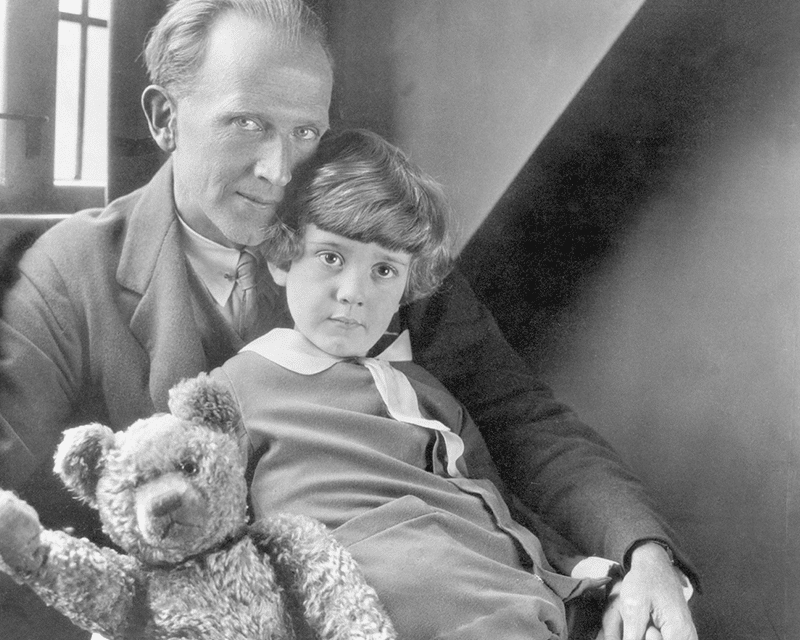
How often was AA Milne read to by his dad? What about his son, Christopher Robin, who inspired the character of the same name? Both were raised by devoted nannies, so… not much, probably. In our digital age, the luxury of ignoring your own children is no longer the preserve of the wealthy, but it was once a mark of status. Christopher Robin Milne lived upstairs with Nanny Nou, quite separately from his parents below. He was only seven when his father stopped writing children’s books, but he and his bear were already famous. For many years, Christopher Milne resented his unique predicament, feeling “in pessimistic moments” that his father had “filched from me my good name and left me with nothing but the empty fame of being his son.” In Milne’s play, The Great Broxopp – written before boy or bear were conceived – a son rails at his entrepreneurial father for exploiting him during infancy. “I’m not a man at all,” he despairs. “I’m just a living advertisement of Beans.”
In the pre-WW1 works of Milne’s literary heroes, Peter Pan and The Wind in the Willows, there is armed conflict amidst the fairies and anthropomorphic animals. In the Hundred Acre Wood, we find peace.
Milne was resolutely principled, and it would be wrong to condemn his naivety with the benefit of our media-savvy hindsight. In any case, the success of the children’s books was as burdensome for the father as for the son. A prolific playwright, poet, novelist and essayist, Milne despaired at “the Whimsical label” that dogged his literary output post-Pooh; “those four trifles for the young” were not quite the immortality he had hoped for. Yet Milne’s legacy reaches beyond his beloved stories and poems, as his generous bequest to the RLF continues to support writers across the UK.
By 1934, when Milne completed what he considered his most important work, Peace with Honour, his pacifism was less contentious than it had been twenty years earlier. Despite his convictions, he had volunteered in 1915 (“wartime is hell anyway, and only in uniform can one escape from thinking about it”) and served in the Battle of the Somme. The Pooh books of the 1920s hum with nostalgia: “never such innocence again”, as Larkin put it in in his poem, ‘MCMXIV’. In the pre-WW1 works of Milne’s literary heroes, Peter Pan and The Wind in the Willows, there is armed conflict amidst the fairies and anthropomorphic animals. In the Hundred Acre Wood, we find peace.
“We may agree that Pacifists are not necessarily cowards, nor Militarists brave,” Milne wrote. “Dare we go farther and suggest that war is not necessarily manly, nor peace effeminate?” Milne knew that even the mildest challenge to prevailing notions of masculinity would be met with extreme sensitivity. In his 1929 play, Michael and Mary, the sight of a young man kissing “the joined hands” of his parents caused quite a stir. Milne laughed off his contemporaries’ squeamishness, lampooning their flustered outrage in his introduction to the published script: “‘I mean to say, dammit, a fella, public school and all that, kissing half the hand of another fella…’”
© EH Shepard LLP The Estate of EH Shepard
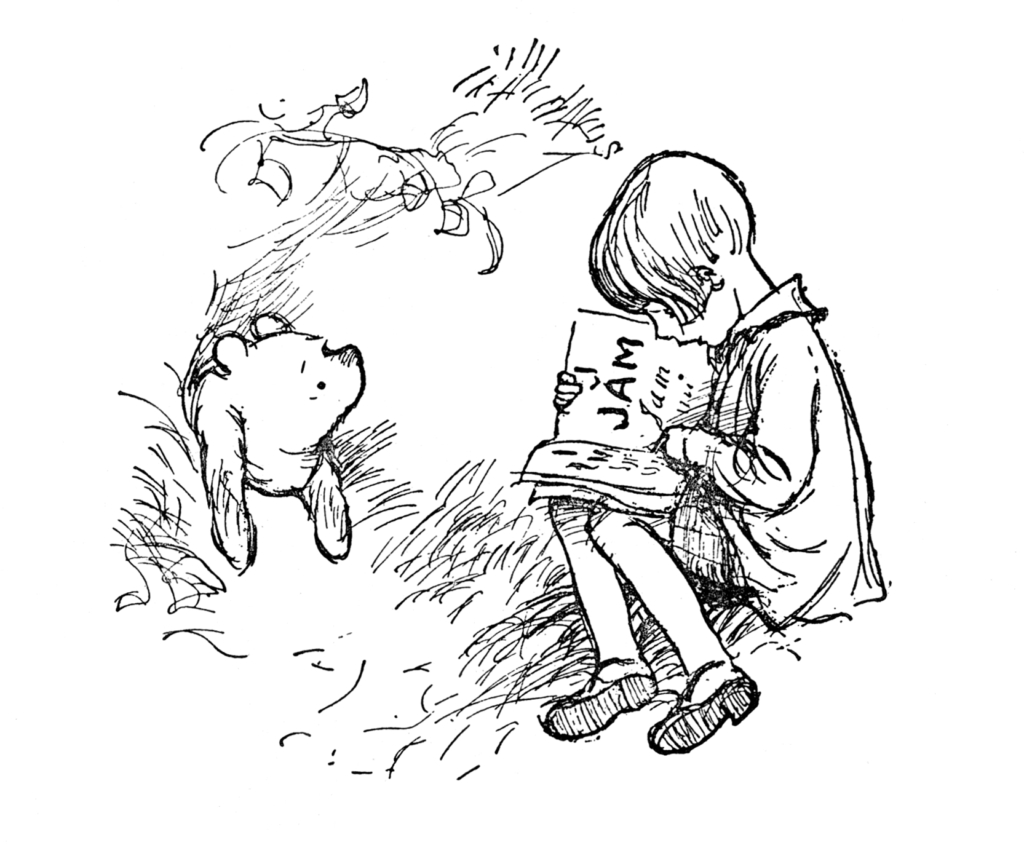
There is perhaps a note of authorial longing in this unintentionally provocative scene of paternal-filial affection. In the 2017 biographical movie, Goodbye Christopher Robin, Kelly Macdonald’s Nanny Nou forces a narrowing of the emotional distance between father and son by going away for a few days. Confronted with the practical realities of parenting, man, boy and teddies head into the woods… It’s classic biopic fare. The movie’s climactic reconciliation is the revisionist narrative we’d love to believe; having given Winnie-the-Pooh to the world, the Milnes deserve their happy ending together.
In the movies, dads often need rescuing from their own parental failure. The nanny-as-saviour-of-emotionally-repressed-father trope is familiar from Disney’s Mary Poppins (released two years before the first Pooh film and also benefiting from the genius songwriting of the Sherman Brothers). Only when the joys of fatherhood have been fully revealed to Mr Banks can Poppins relinquish her duty and float triumphantly away. In Disney’s Christopher Robin (2018), Ewan McGregor’s grown-up (and definitely not “real”) Christopher Robin is guided away from the stress of middle management and back into the arms of his daughter by Winnie-the-Pooh himself. The Magic Faraway Tree (2026) subtly tinkers with the dad-saving formula by relocating Enid Blyton’s quirky classic to the present day – so that now it is the screen-addicted children whose imaginations and sense of fun need salvaging (but mainly for the sake of Dad’s unfulfilled tomato-growing dreams).
Oh, dads, dads, dads… Enough waiting around to be saved by airborne nannies and whimsical bears! While masculinity continues to evolve, let’s lean in to the most beautifully indirect way of sharing an emotional journey. It’s time to Man Up, Cuddle Up, and Go All In for a bedtime story.
Jim Beckett is a writer specialising in children’s fiction. Buzz Sausage Wolf (Hachette, 2025, 2026) is a funny and heartwarming series for younger readers about a little dog’s endearing struggles to make sense of the world. The Caravan at the Edge of Doomand Foul Prophecy (HarperCollins, 2021, 2022) are comic fantasies for 8+ about an epic rescue mission into the land of the dead through a caravan toilet. Jim regularly visits schools, inspiring staff and pupils with his entertaining assemblies and workshops.
This article originally appeared on our Substack.
You might also like:
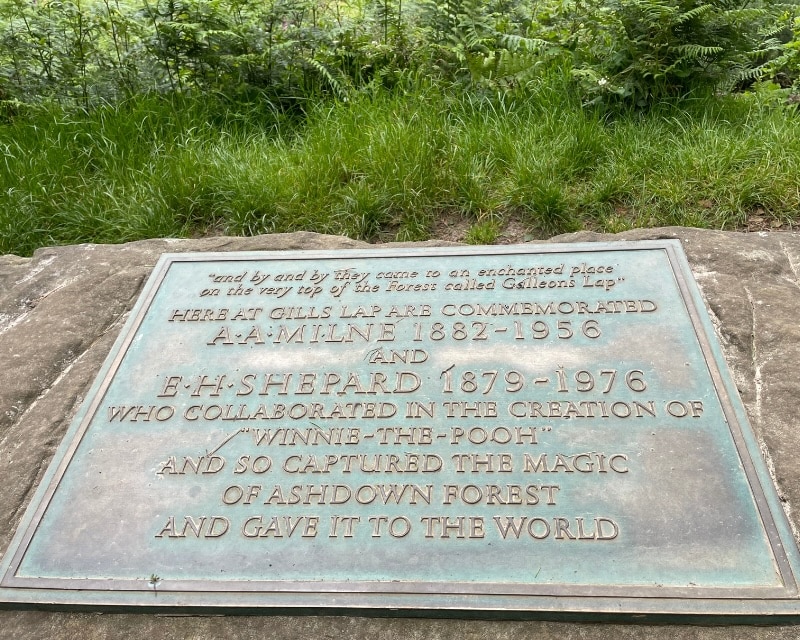
Ashdown Forest – exploring the real Hundred Acre Wood
Dr Sanjida O’Connell on the flora, fauna and animal and bird species that live in the woods that inspired Winnie-the-Pooh.
Passing on the pen: a writer’s legacy
Writers AA Milne and Arthur Ransome share a birthday – and they both donated a portion of their estate to…
RLF writers join forces with Winnie-the-Pooh
Jane Riordan and RLF writers Sheena Wilkinson, Amanda Swift, Jasbinder Bilan, Sophie Kirtley, Jim Beckett, Anna Wilson, Teresa Heapy, Maisie…