
- Collected
- Article
Anita Desai’s In Custody – on screen, and in translation
- 21 September, 2026
- Shahrukh Husain
In the early 1990s, Shahrukh Husain worked with Ismail Merchant – one half of celebrated film company Merchant Ivory Productions – and bestselling Indian novelist Anita Desai, who has been shortlisted for The Booker Prize three times, on the film adaptation of Desai’s novel In Custody. This included translating Desai’s draft script into Urdu, which for Shahrukh also gave her the opportunity to bring in her research on the work of three iconic Urdu poets.
Here, she reflects on the challenges and joys of adapting – and translating – a work like In Custody for the screen.

Shahrukh Husain
“Today the mind wanders again in search of a word.” – Faiz Ahmed Faiz
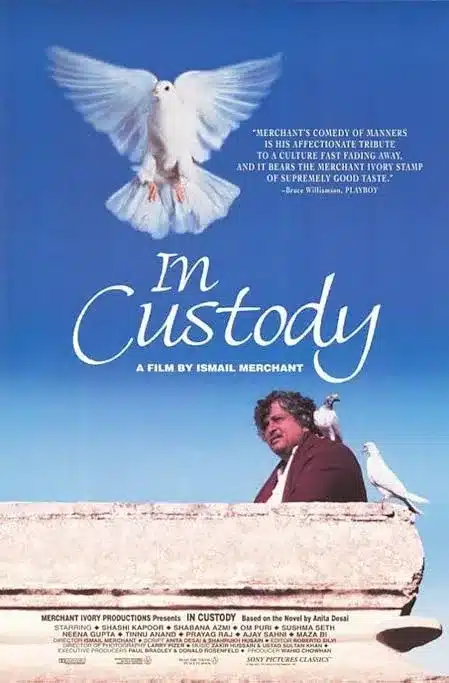
I couldn’t quite believe my luck when film producer Ismail Merchant invited me to work with Anita Desai on the 1993 Merchant-Ivory adaptation of her Booker-shortlisted 1984 novel, In Custody.
The film opens with the above line from Pakistan’s favourite poet, Faiz Ahmed Faiz. I chose it because it chimed with the fading verve of the poet at the centre of the film. The parallel with my own position felt uncanny. Adapting In Custody was a continuous negotiation between worlds that did not quite align. I was not simply restructuring prose but deciding how a vanishing linguistic culture would sound on screen.
The decision to turn the book into a film was bold, inspired and a little crazy. In Custody follows Deven Sharma (Om Puri), a diffident Hindi lecturer privately devoted to the fading world of Urdu poetry. When he is given the chance to interview his idol, the once-celebrated poet Nur Shahjahanabadi (Shashi Kapoor), he yearns to preserve his literary greatness. Instead, he encounters a temperamental figure presiding over domestic rivalry, debt, and artistic decline. Nur sees Urdu as a dying language. “If Urdu is no more,” he asks, “of what significance is its poetry?” Ultimately, after challenges and humiliations, Deven inherits custody of the poet’s oeuvre.
Ismail Merchant was passionate about Urdu and the larger-than-life character of Nur, and was looking for someone to translate Anita Desai’s draft script of In Custody into Urdu. I had recently trained in screenwriting, and my research focused on the work of three iconic Urdu poets, including Faiz. In a flash of synchronicity, the two sides converged when my brother Aamer Husain introduced us.
Ismail was friendly, unassuming and passionate about the movie and as our conversations became more personal our ardour for Urdu poetry became a driving force. We spoke about screenwriting, because our connection to it was based less on scholarship than on affection and allegiance. And as the discussions grew, I realised he was expecting more than just a translation. He was expecting an adaptation.
Though terrified, I leapt at the chance. Armed with terms like ‘inciting incidents’ and ‘narrative turns’, I felt newly alert to the demands of cinema. Yet Anita’s draft screenplay – elegant, restrained, faithful to her novel – still breathed like prose. It lingered in interiority, small humiliations and quiet irony. My work with three major Urdu poets aligned me with the material, but my limited experience in film did not yet steady me. Between structural discipline and tonal delicacy, I felt suspended.
I worried about trespassing on work I deeply admired and the fear of making explicit what Anita had deliberately left subtle. But adaptation requires a certain bravery. Fidelity cannot simply mean preservation. A film must find its own life.
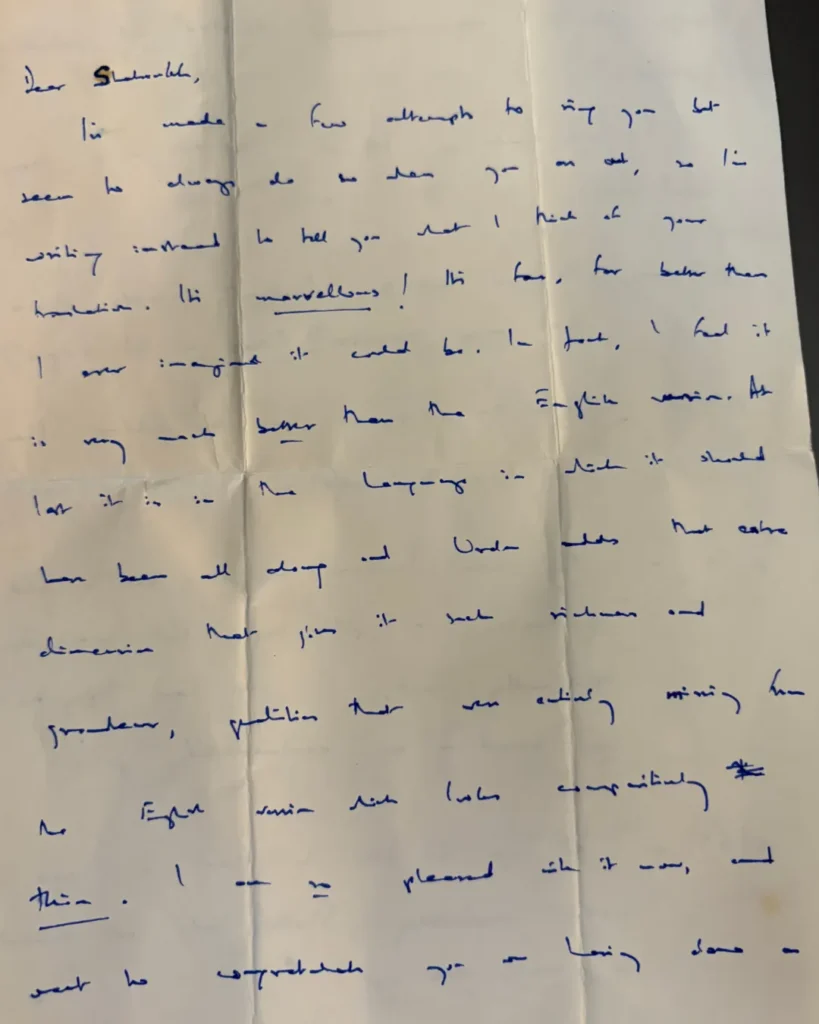
The first page of a letter written to Shahrukh Husain by Anita Desai, which reads in part: “I’m writing instead to tell you what I think of your translation….It’s marvellous! It’s far, far better than I ever imagined it could be. In fact, I find it is very much better than the English version. At last it is in the language in which it should have been all along and Urdu adds that extra dimension that gives it real richness and grandeur, qualities that were actually missing from the English version which looks surprisingly thin.” © All rights and credit go to the owner. No copyright infringement intended.
Ismail Merchant’s commitment to elegant Urdu was passionate. For him, the story was not merely about an ageing poet. It was about the erosion of an entire cultural world. Urdu carried a particular sensibility, aesthetic refinement and emotional register. The language itself had to be heard, not merely discussed.
Between Anita’s restraint and Ismail’s exuberance, I found myself constantly adjusting tone and emphasis. My task became one of balance: preserving the novel’s subtlety while allowing the film to inhabit the richness of the world it portrayed.
Language became an act of negotiation. As luck would have it, around the same time as the project began, Hindi and Urdu were occupying increasingly politicised positions. Hindi was consciously being elevated through the addition of Sanskrit vocabulary, while Urdu was dismissed as archaic and ornamental. Yet everyday speech remained fluid and complex.
I listened obsessively. Urdu had always surrounded me. My own family inhabited a linguistic spectrum stretching from courtly elegance to earthy street idiom. The challenge was to preserve that range without turning it into a caricature.
The character of Deven sat at the centre of these concerns. His passion for Urdu and Nur’s oeuvre blinded him to practical realities and humiliation. Preserving that distinction became crucial to the adaptation.
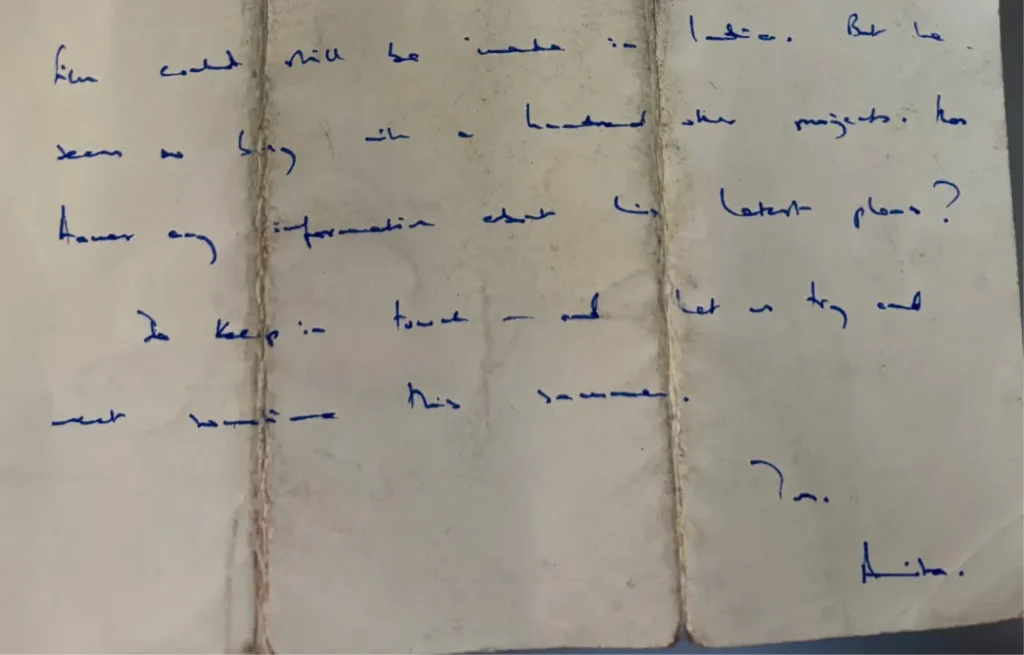
The final page of Anita’s letter, written to Shahrukh Husain during the process of working on In Custody, including her signature. © All rights and credit go to the owner. No copyright infringement intended.
The turning point for me came when we began selecting the poetry. Everything suddenly became clearer. The poems would carry much of the emotional burden of the film. They had to convince us that Nur, once a great poet, also embodied the themes of loss, memory and cultural decline that run throughout the story.
My conversations with Ismail deepened considerably during this period. We were wrestling with the practical question of how poetry could function dramatically on screen. Music, we felt, might be the solution. Typically, Ismail picked up the phone immediately and called Zakir Hussain, the tabla maestro and composer.
Zakir spoke warmly about the choice of the opening Faiz verse and how poetry had been woven into the narrative. We discussed the challenge of marrying the external story to its inner emotional life. His observations confirmed something I was coming to understand: that adaptation is not a matter of transferring a work intact from one medium to another. It is a process of redistributing meaning.
At a certain point, I had to relinquish my idealisations of the poet, the novelist and even the novel and treat the adaptation as a professional undertaking. The challenge was no longer simply to honour the source material but to create the best possible film.
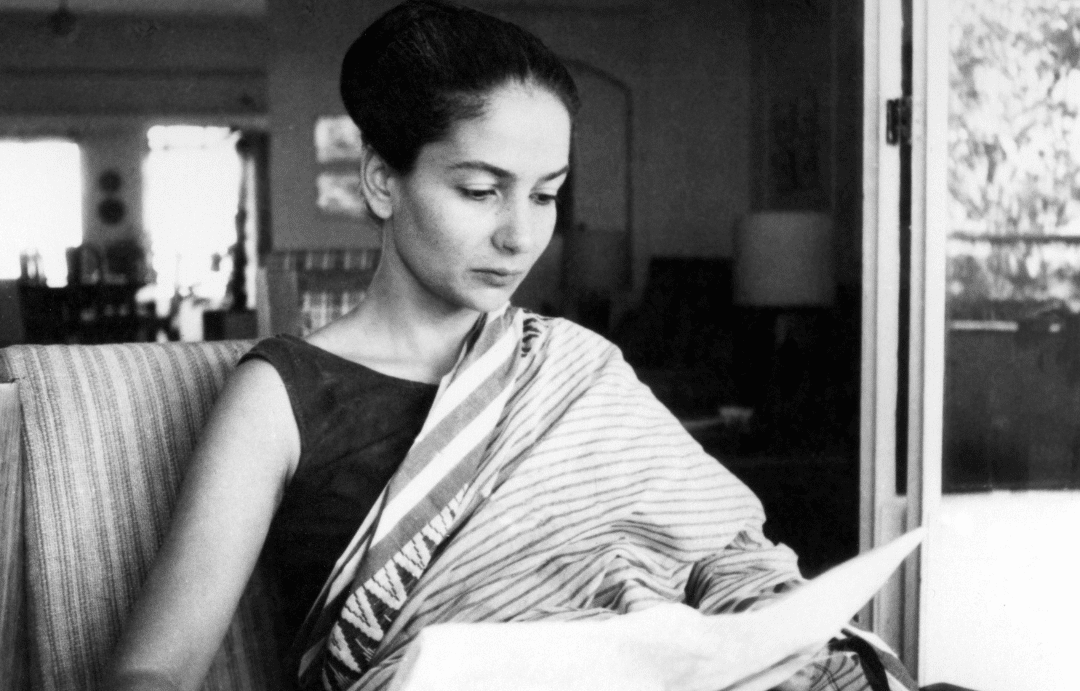
Then came the nerves of sending the script to Anita Desai. I had entered her world, partly rearranged its architecture and given voice to what she had often left unspoken. Her response was extraordinarily generous. The letter that arrived, followed by a warm telephone conversation, remains one of the most gratifying moments of my professional life. Her friendship and trust meant more than I can say and lasts to this day.
Book-ended by Faiz’s poetry, the film begins with the search for a word and ends at Nur’s funeral. Deven’s world may be fading, but through poetry it continues to speak. In the end, it is Deven who prevails. Once ridiculed, manipulated and frequently out of place, he becomes the unlikely custodian of Nur’s legacy.
Perhaps that is what adaptation seeks to do as well: to help a voice survive its passage from one form into another. If that balance is held, even imperfectly, the film has honoured its custody.
This article originally appeared on our Substack.
Main image © Anita Desai Everett Collection Alamy.
You might also like:
Stephen Unwin on Man to Man and the art of Anthony Vivis’ translation
As Manfred Karge’s Man to Man returns to The Royal Court, director Stephen Unwin reflects on RLF benefactor Anthony Vivis’…
“Nothing about us without us” – Jonny Wright on Black television
RLF Fellow and screenwriter Jonny Wright on the evolution and impact of Black television, from 1990s American shows The Cosby…
A constant state of creative triage
Sameera Steward on what it takes to earn a living as a screenwriter for streaming services like Netflix in 2026