- RLF News
- Article
My Writing Life: Ian Seed
- 12 January, 2026
- Ian Seed
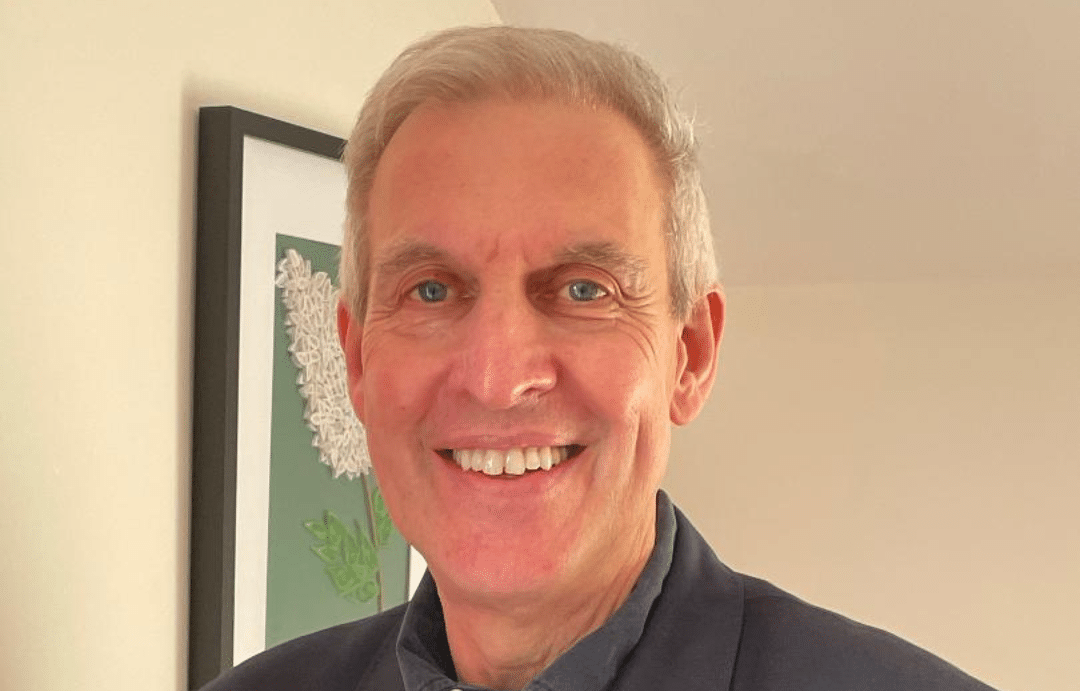
Ian Seed is an award-winning poet, translator, short-story writer, essayist and editor. Ian’s collection of prose poetry, New York Hotel (Shearsman, 2018) was featured on BBC Radio Merseyside and was a TLS Book of the Year, while Identity Papers (2016) and Makers of Empty Dreams (2014) were showcased on BBC Radio Three’s The Verb. His most recent book is Night Window (Shearsman, 2024).
1. What book should every writer read?
Every writer should read and return to those books which make them want to write. In my own case, I was smitten in my late teens by the stories of Franz Kafka, above all perhaps, The Trial (which famously Kafka instructed Max Brod to burn after his death).
It is a novel which is both real and surreal, personal and political (in the wider sense of that word), tragic and farcical. The Trial, like The Castle, is eminently readable but also open to infinite levels of interpretation. It was a book which unsealed all kinds of possibility for me, even if the bulk of my writing takes the form of short prose or poetry.
2. What is your typical writing day like?
I don’t really have a typical writing day. A lot will depend on other commitments, or even on how I’m feeling. However, I do normally write something every day, even if it’s just a few early morning thoughts, such as images which come to me when I wake up or when travelling on the early morning train (as RLF Fellow, I’ve been commuting from Lancaster to Liverpool). Two or three times a week, I will find the time to go back over my jottings and develop them into a draft of a poem, small fiction, or a longer short story, which I will then redraft (sometimes endlessly) over the coming days or weeks. On occasion, it may be several years before I feel that something is right. Other times, I am lucky enough for a poem or small fiction to seem to appear of its own accord with hardly any interference on my part. The latter are often my favourite pieces because I feel as if it wasn’t me who wrote them.
I am also a translator from French and Italian. For some reason, I find the afternoons better for this, and I need at least a one-hour sitting to be productive. The process of translating often gives me ideas for my own writing. For example, my most recent book, Night Window, is soaked in the spirit of Max Jacob, whose prose poems I was translating at the same time as I was writing it.
3. Who has been an influential figure in your writing career?
My late mother was key in helping me believe that I could become a writer of one sort or another. She typed up my poems for me, which were mainly awful of course, when I was a teenager. When my poems started to get better, she was also an excellent editor, especially when it came to cutting unnecessary words or phrases. I owe something of my sparse, pared down style to her.
Another important figure was my English teacher, David Herbert, a published poet himself, who kindly gave me feedback and practical advice on sending work out, telling me not to worry too much about rejections. I remember him telling me that my strong point was my use of imagery.
I also owe a lot to my wife, Justyna, who had faith in my prose poems long before I published my first full-length collection, Anonymous Intruder.
4. What is the one thing you wish someone had told you before you started your career as a professional writer?
I wish someone had told me about the importance of being part of a community of writers. I had too many pseudo-romantic ideas in my head about poets in garrets. When as a young man I went to work in Italy as a Teacher of English as a Foreign Language, I slowly lost touch with editors and fellow small-press poets back in the UK. Of course, this was long before the internet and mobile phones, but if I’d understood how vital community is I would have made more effort. I think that not understanding this actually set me back a couple of decades. It wasn’t until I returned to the UK (after working in different countries in Europe) and took an MA in Creative Writing at Lancaster University (I was fortunate to be in a position to do this) that I returned to the writing fold.
5. What is the best advice you’ve ever received about your writing?
To let myself take joy in the process of creating, drafting, redrafting, refining…to let myself fiddle and play… to let myself worry about the reader later (though I guess that somewhere in the back of my mind my dear reader is always present)…to allow the poem or story to make its own journey…
I think this is probably a conglomeration of different pieces of advice I’ve received over the years.
6. What has been the proudest moment of your career so far?
When my book New York Hotel (Shearsman, 2018) was nominated by Mark Ford, a poet I’ve long admired, as his TLSBook of the Year, it felt completely unreal. A former colleague of mine gave me the news and I thought he was playing a prank on me.
I should add that when any reader or editor tells me how much they have enjoyed my writing, or how much it has meant to them, I feel honoured and proud.
7. What are you reading right now?
April Horner’s A Savage Innocence, the first biography of the neglected novelist Barbara Comyns, which came out in April. I only discovered the books of Comyns last year, and quickly became addicted to them. Comyns’ novels generally fall into two categories, the quirkily realist, for example A Touch of Mistletoe (1967), or the more fairy-tale, surrealistic, for example The Vet’s Daughter (1959). She leaves you not knowing whether you want to laugh or cry. Writers of both prose and poetry can learn a lot from her unique use of imagery and narrative voice. Comyns drew much of her material from her own life, and it is fascinating to see in Horner’s biography how fact and fiction intertwine.
8. Are you a bookmarker or page-folder?
A bookmarker, although I also fold pages to return to later.
This article originally appeared on our Substack.
You might also like:
My Writing Life: Bidisha Mamata
Bidisha Mamata is a writer, broadcaster and an artist who makes films and stills. She is the author of the…

My Writing Life: Alex Wong
“There are no practical revelations I wish I’d had earlier. I only wish I’d been able to save myself some…
My Writing Life: Alice Jolly
“I can conquer the world between 7 and 11 am. After that, I am no good for anything.” – author…