- Collected
- Article
On the books that stay with you: reading inspiration from RLF writers
At the Royal Literary Fund, we know the power of a good book – as, of course, do our writers. So, to celebrate the National Year of Reading, we revisited our Collected: The Podcast audio archive to hear about some of the books that unlocked a writers’ love of reading.
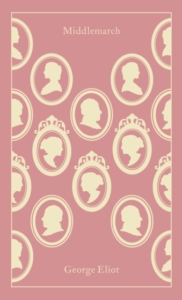 Maria McCann: Middlemarch by George Eliot
First published in 1871, Eliot’s Middlemarch: A Study of Provincial Life is an ambitious exploration of the intersecting lives of a group of characters in a Midlands town.
Described by Virginia Woolf as “one of the few English novels written for adult people”, Middlemarch was also the first novel to have a powerful impact on writer Maria McCann, who says:
Each time I return to Middlemarch l find it has changed; on first reading it was the story of Dorothea, nowadays she has to share my interest with less glamorous characters. It’s partly because I’m ageing, partly because Eliot persistently directs and educates my sympathies.
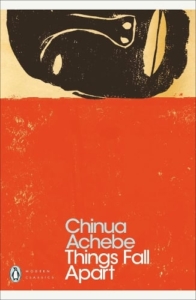
Gabriel Gbadamosi: Things Fall Apart by Chinua Achebe
Things Fall Apart (1958), set in pre-colonial Nigeria, was Chinua Achebe’s debut novel. It tells the story of renowned Igbo warrior Okonkwo, who returns from exile to find his village occupied by missionaries and colonial governors.
The first in Achebe’s foundational African Trilogy, Things Fall Apart was a worldwide bestseller that revolutionised literature – and an inspirational read for writer Gabriel Gbadamosi, as he says:
Chinua Achebe, an Igbo from Nigeria of my father’s generation, wrote Things Fall Apart, with its title by an Irishman and its split focus between a pre-colonial West African people and culture and a British colonial administrator. It was, when I read it, the best thing I had ever read. It told me: if you want to see the dance of a people’s spirit passing on the street, you cannot stand still in one place, you have to change places, you must engage with it as it moves along.
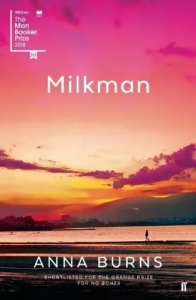
Bernie McGill: Milkman by Anna Burns
RLF beneficiary Anna Burns’ groundbreaking novel Milkman – which won The Booker Prize in 2018, making Burns the first Northern Irish author to receive the award – is set in a fictionalised version of Belfast during the Troubles, though the language about the conflict and indeed the characters living through it is deliberately vague.
Novelist and short-story writer Bernie McGill grew up in south Derry during the same time period, and reading Milkman resonated strongly with her experiences. She says:
Anna Burns’s Milkman changed the way I think. I read it in the summer of 2018 when I was at first won over by the light conversational tone, the naming of characters by nickname or by relationship, the protagonist’s love of reading-while-walking, the otherworldliness of the unnamed cityscape she describes. A little way in, I found that I was holding the thread of the narrative the way that you might hold a breath. And the more I read, the more familiar this world began to appear.
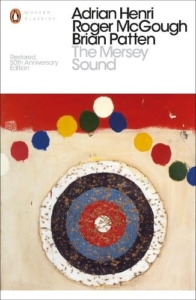
Diana Hendry: The Mersey Sound Anthology by Adrian Henri, Roger McGough and Brian Patten
For poet and children’s writer Diana Hendry, one of the first books to capture her interest was a collection of work by three Liverpudlian poets, who became collectively known as The Mersey Poets.
She describes:
I was living near Liverpool when, in 1967, Penguin Modern Poets published The Mersey Sound, an anthology of poems by Adrian Henri, Roger McGough and Brian Patten.
Of course I knew something about poetry. After all, I’d been sent to elocution lessons to cure me (ironically) of my scouse accent. I could recite John Masefield’s ‘Sea Fever’ (still loved) by heart. But this poetry, poetry furnished with ordinary people like bus drivers and sad aunts and written in a language that was playful, witty and brand new had an energy that was irresistibly exciting. It was the poetic cousin to The Beatles.
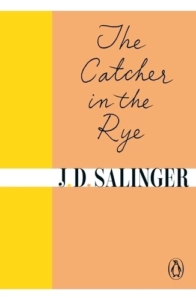
Tom Connolly: The Catcher In the Rye by JD Salinger
Widely recognised as a classic of the genre, JD Salinger’s The Catcher in The Rye (1951) is a coming-of-age story that remains one of the most-read books in contemporary American literature.
Novelist and screenwriter Tom Connolly is one of those first captured by Salinger’s tale of a disaffected teenager during his own teenage years:
The Catcher in the Rye was the first book I re-read. It was the first book that I chose to stay between the pages of rather than be outside marauding around the countryside or playing sport. Before The Catcher in the Rye entered my life, I was in the slow lane at school – but then an English teacher I feared but considered cool on account of him having been in the squad for the 1968 Mexico Olympics, walked into our classroom and slapped a silver-cover version of JD Salinger’s novel down in front of each one of us. ‘Read it,’ he said, ‘all lesson, for homework, and the next lesson and next homework, until you’ve finished it.’ And thirty-five minutes later, when the bell went, the change in me had begun.
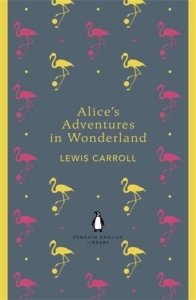
Rukhsana Ahmad: Alice’s Adventures in Wonderland by Lewis Carroll
With its memorable characters and fantastical scenes, Lewis Carroll’s Alice’s Adventures in Wonderland (1865) is one of the best-known children’s books in the world.
And the books we read in childhood have a particular tendency to stay with us, as playwright Rukhsana Ahmad reminisces:
I read Alice’s Adventures in Wonderland on my sister’s recommendation and fell in love with it. It was a different kind of story, about an ordinary little girl walking through a dream. The illustration, a tiny doll’s house door that led Alice into a topsy-turvy universe, is still vivid in my memory. It was a world stranger than the strange English world portrayed in my school textbooks.
Alice turned me into an addict: I became an avid reader, always in search of fantasies. Science fiction, adventure, mysteries and later, detective fiction and romances, in both English and Urdu, fed my insatiable thirst.
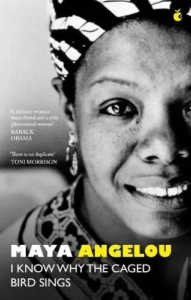
Millie Murray: I Know Why The Caged Bird Sings by Maya Angelou
Maya Angelou’s I Know Why The Caged Bird Sings, the first of seven volumes of autobiography that chart Angelou’s life, was published in 1969. Decades later, it is still an international bestseller, beloved for its unflinching honesty and evocative portrayal of Angelou’s life as a young Black girl in the American South of the 1930s.
For writer Millie Murray, who first read it in London in the 1980s, it is a book that continues to inspire. She says:
A friend gave me a book by Maya Angelou, I Know Why The Caged Bird Sings. It transformed my life and encouraged me to take the plunge and write. It also changed my perception of who and what I could become. It had never dawned on me that people of colour wrote books – I had never read one up until that point in my life. I can only describe it as a dawn-breaking moment, in which the sun slowly rises and the dark night is peeled back as the light breaks forth.
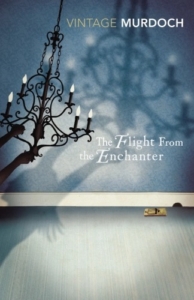
Philip Womack: The Flight from the Enchanter by Iris Murdoch
Iris Murdoch was a prolific writer, publishing 26 novels in her lifetime. Seven were shortlisted for The Booker Prizes and in 1978, one – The Sea, The Sea – won.
But for writer Philip Womack it was an early Murdoch novel, The Flight from the Enchanter (1956), that drew him in:
The first Iris Murdoch novel I ever read, aged about fourteen, was The Flight from the Enchanter. It was like a magnesium flame in the darkness. The bohemian, rackety world she depicted enraptured me; still more, her writing.
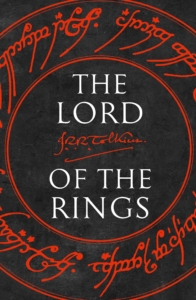
Roopa Farooki: The Lord of The Rings by JRR Tolkien
Another children’s classic that lives on in many readers imaginations is JRR Tolkien’s Lord of the Rings series (from 1968).
A trilogy set in the fantasy world of Middle-earth, the richly imagined epic was one of a number of books that inspired novelist and doctor Roopa Farooki:
The first book that swept me away into its world was The Lord of the Rings. I had always been a voracious reader before, but when I came across Tolkien’s trilogy in the library, I couldn’t put it down… The richness of Tolkien’s mythology completely hooked me, and I read as though I was addicted. I resented the time it took me to brush my teeth and get washed and eat my meals, as it was taking me away from the pages.
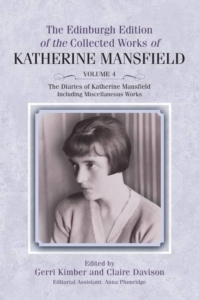
Kathleen Jones: the diaries of Katherine Mansfield
Non-fiction writer Kathleen Jones was so inspired by modernist writer and critic Katherine Mansfield (1888 – 1923) she went on to write a biography of her, The Story-Teller.
Here, she explains where her fascination began:
As a young girl in London, determined to escape my rural northern environment, I found a battered copy of Katherine Mansfield’s diaries in a second-hand book bin in the Charing Cross Road. My teenage self connected fiercely with that other teenager who came from New Zealand to London, desperate to be a writer. I found a reflection of my own life and ambition in Mansfield’s, bought a cheap edition of her short stories and read them until the binding fell apart and it had to be held together with an elastic band. Her writing and what she wrote about writing became essential to me. Although long dead, she was a constant mentor.
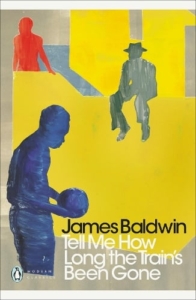
Kerry Young: Tell Me How Long the Train’s Been Gone by James Baldwin
Tell Me How Long the Train’s Been Gone (1968) is the fourth novel by American writer and civil rights activist James Baldwin.
For novelist Kerry Young, it was an introduction to Baldwin’s work, which in turn opened up a whole new world of inspiration. She says:
At the age of seventeen, I borrowed a book from my sister. It was James Baldwin’s Tell Me How Long The Train’s Been Gone. I devoured it. I just lay on the sofa and read it non-stop until it was done. That novel changed my life. How? Why? Because for the first time I saw in a book something that connected to some semblance of my own experience. It felt alive and real. It felt meaningful.
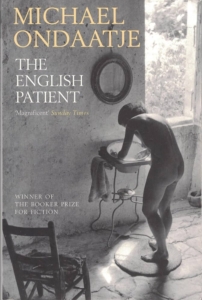
Susan Fletcher: The English Patient by Michael Ondaatje
Many people know The English Patient because of the 1996 film adaptation, but Michael Ondaatje’s novel was a game-changer as soon as it was published in 1992. Another Booker Prize winner, The English Patient explores the wartime experiences of four people in an Italian villa towards the end of World War II. In 2018, it was voted the best Booker Prize winning novel of all time.
For novelist Susan Fletcher, its depiction of the interior lives of its characters is what makes the book stand the test of time:
Even now – twenty-three years after I first read it – no book that has taken my breath away so frequently or quietly as Michael Ondaatje’s The English Patient. I say quietly because this never feels to be a loud book: it is fluid, tender, intensely poetic; its characters are tired and damaged by war . They reminisce. They grieve. It’s a novel of aftermath – about what is left.
This article originally appeared on our Substack.
You might also like:
Eleven tips to help you become a better writer
“You have to sit down and do it and keep on doing it until you get there.” Our RLF Fellows…
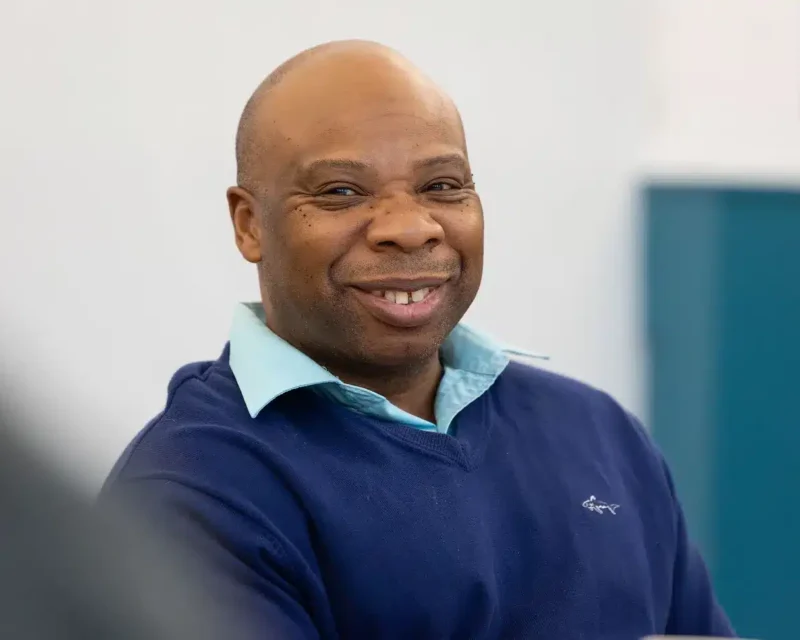
“Our shared interest is in the imagination” – Our Reading Round group in Bristol
“The simplicity of it is key,” says Dr Edson Burton, writer, historian, playwright and tutor, who is running a RLF Reading Round group…
Eleven things I’d tell myself as a young writer
“Read well and read wide.” – Robin Etherington. RLF writers on the advice they would give to their younger selves.