
- Collected
- Article
Much depends on dinner: Orlando Murrin on how food can be used to engage all the senses
- 16 November, 2026
- Orlando Murrin
Five years ago, I made the decision to change gear in my writing life. Having written six cookbooks and endless articles about food and cooking, I was determined to pursue my dream of writing fiction. I felt it was now or never.
I wish I’d studied the craft more carefully before diving in. The problem was partly arrogance – imagining that having knocked out literally thousands of recipes over the years, I could write anything. And partly that there were so many resources available I didn’t know where to begin. How does one choose between all the retreats/ courses/ academies/ tutorials/ manuals on offer?
After many a false start, I decided to set my story in a posh but frayed-round-the-edges cookery school, where a tutor and his students find themselves suspected of a grisly murder. I found the best way into my characters’ heads was to determine their eating habits.
What foods do they like, or dislike? Would they rather eat at home – or at a dinner party, greasy spoon or restaurant? Do they have elegant table manners, use the wrong forks, or eat with their mouths open? In the kitchen, are they clumsy or delicate when handling fragile pastry dough or sharp knives? As Jean Anthelme Brillat-Savarin, the father of gastronomy, put it:
“Tell me what you eat and I’ll tell you who you are.”

A selection of the recipes featured in Orlando Murrin’s novel Knife Skills for Beginners. © Angela Nilsen Photography.
Food is not just a great way into your characters, it’s an effective and economical way to set the mood, provide social commentary, even drive the plot. Think Miss Havisham’s wedding feast, left to decay for decades, with the mouldering cake at its centre. Ratty’s picnic hamper in The Wind in the Willows, evoking an idyllic summer afternoon. Proust’s madeleine, unlocking childhood memories. Mrs Ramsay’s boeuf en daube in To The Lighthouse, bringing her guests together. Cucumber sandwiches in The Importance of Being Earnest, a delicious source of comedy and innuendo.
For a masterclass in how food can influence a story, I’d recommend a treat from the Golden Age of crime fiction: Josephine Tey’s The Franchise Affair (1948), voted the 11th greatest mystery novel of all time by the The Crime Writer’s Association. Towards the end, Marion Sharpe and her mother – living in genteel poverty, and without a cook – astonish their guests with a delicious dinner, washed down by a dusty bottle of excellent burgundy from the late father’s cellar. Marion laughingly confesses the feast was assembled from clever purchases at local shops, requiring scarcely any cooking. It’s a triumph of ingenuity over adversity and does nothing to diminish solicitor Robert Blair’s growing affection for her.
As a crime writer myself, I feel Agatha Christie forever breathing down my shoulder. Poirot, with his fastidious eating habits and disdain for English cooking, uses mealtimes to reflect on his discoveries and work things out. The sleepy fustiness of Bertram’s Hotel is perfectly captured by the old-fashioned seed cake served at tea to Miss Marple. In A Murder is Announced (1950), Mitzi bends the rules of food rationing to create a rich chocolate cake nicknamed by a guest as ‘Delicious Death’.
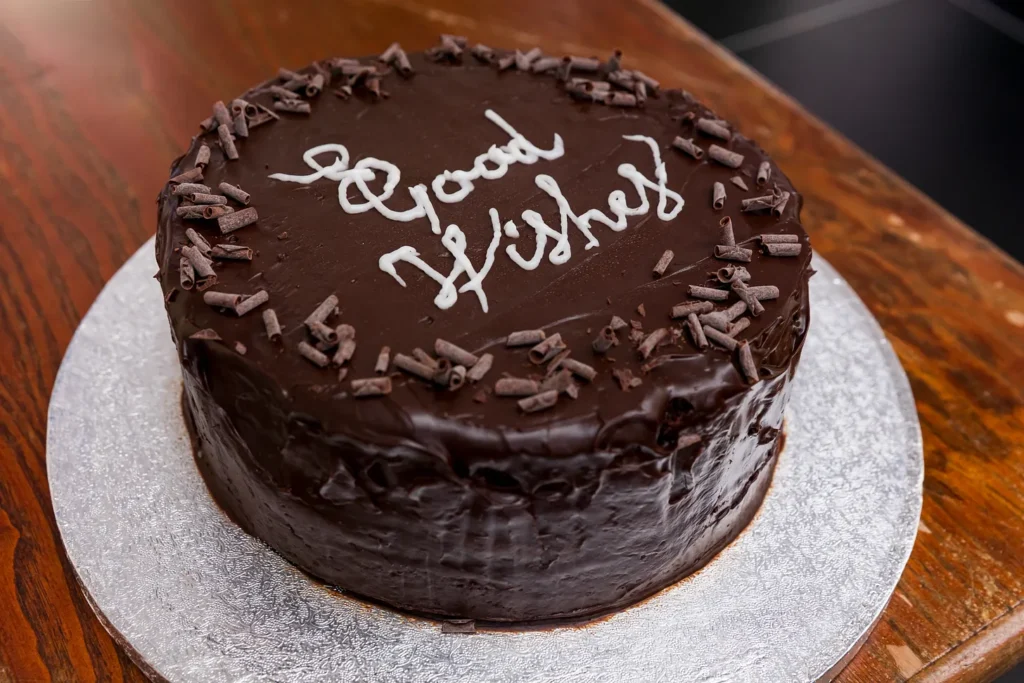
At September’s International Agatha Christie Festival in Torquay, Orlando recreated this extravagant cake from A Murder is Announced. In 1950 rationing was still in effect and Mitzi the cook uses a tin of butter sent from America and raisins that were being kept for Christmas. © Appleton Event Photography
Christie’s fascination with poison is well known – it appears in 46 out of her 66 novels. She slips it into marmalade, fish paste sandwiches or a curry, reinforcing the danger that lurks beneath the surface of everyday life. The sharing of food should be an expression of goodness, generosity and humanity; to corrupt that simple act of trust is to violate an ancient principle of hospitality, explored in literature from The Odyssey to Macbeth. (For anyone interested in exploring poison specifically, I’d recommend Eat, Drink and Be Murdered, a short story collection curated by Martin Edwards as part of the British Library Crime Classics imprint.)
If you’re considering using food in your own work, here are a few questions you might ask yourself.
- What does my character’s relationship with food reveal that their dialogue doesn’t?
- What might happen at a meal that couldn’t happen anywhere else?
- Who has the power at this table, and how might that change?
- Could a meal reveal a secret, provoke a quarrel or alter the course of the story?
To return to my own crime novels, I go a step further and include actual recipes within the narrative. Although I daresay many readers skip over them – thinking they’re decorative, or mere fillers – they’re seeded with hints and clues. (They’re also a colossal amount of extra work, requiring rigorous testing, editing and – for the US market – ‘Americanisation’: after all, my reputation as a food writer is at stake.)
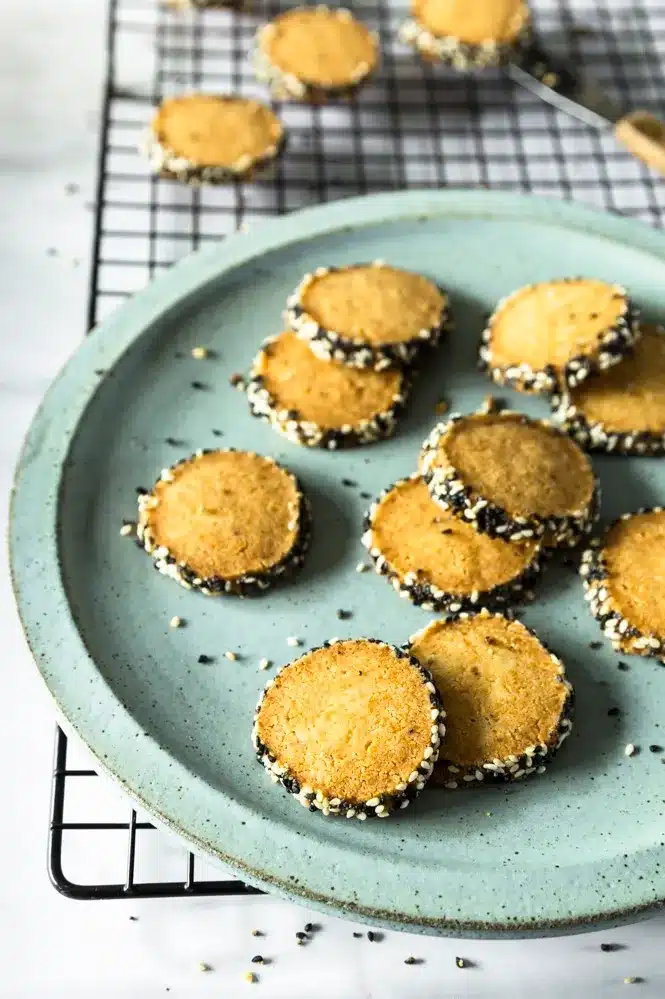
These parmesan biscuits appear in Orlando Murrin’s latest book, and have attracted almost as much praise as the novel itself. © Angela Nilsen Photography.
Whatever you choose to put on the menu, make sure there’s more at stake than the success of the soufflé. As Lord Byron observed:
“Since Eve ate apples, much depends on dinner.”
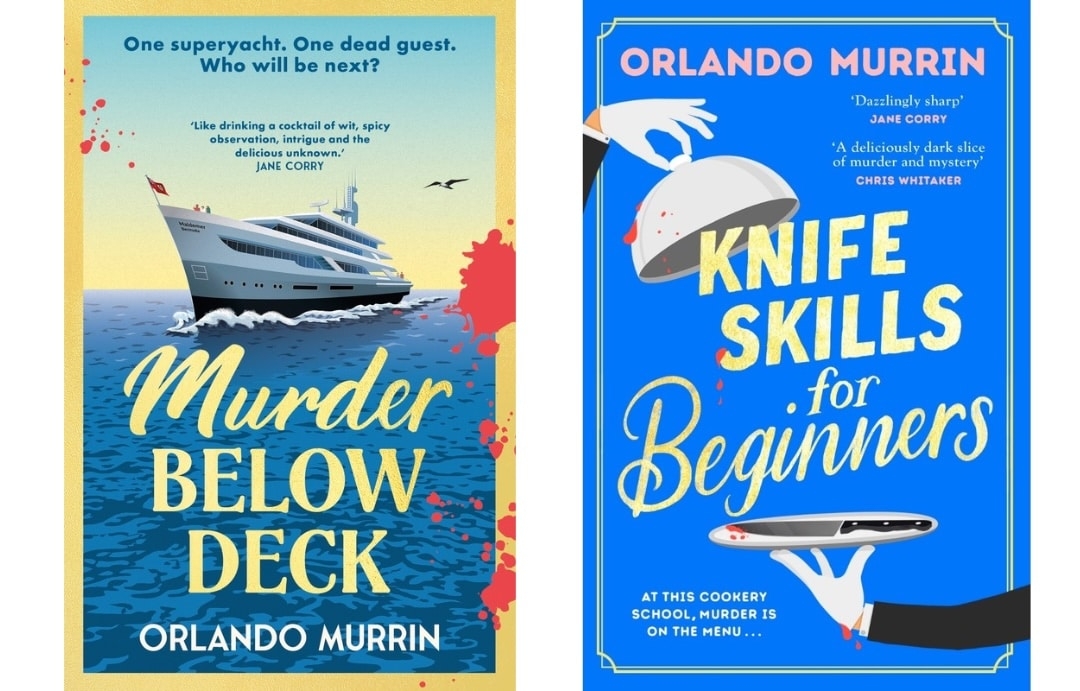
Orlando Murrin has written two culinary crime novels, Knife Skills For Beginners, shortlisted for four national awards including the McDermid Debut Award, and Murder Below Deck. A new standalone – Curdle (Firefinch Publishing) – will come out next Christmas, complete with puzzles and interactive elements. You can find Orlando here.
This article originally appeared on our Substack.
You might also like:
A constant state of creative triage
Sameera Steward on what it takes to earn a living as a screenwriter for streaming services like Netflix in 2026

Blythe Spirit: Ian Collins on Ronald Blythe
Writer Ian Collins, literary executor of RLF benefactor Ronald Blythe’s estate, on the life and times of the renowned nature…

Doing it for the Kids: Children’s authors and the trouble with altruism
Karen McCombie on the challenges of writing for children, when the art of reading is itself facing challenges.