
- Collected
- Article
Final Draft: Abigail Avis on writing Wet Ink
- 21 May, 2026
- Abigail Mann
In her first blog for the Royal Literary Fund, we heard how Abigail Avis – who also writes as Abigail Mann – managed to complete the first draft of her book, Wet Ink, whilst pregnant with her second child.
This time, Abigail tells us what it was like to manage the editing process alongside caring for a newborn baby, parenting her older child, and attending multiple Zoom meetings…
I can’t lie to you. Editing is not my favourite part of the writing process. To think that I’m now on the other side of nine drafts with proof pages open on my laptop, typeset and formatted like a real book, is wild when I consider where I started last autumn.
I mentioned in my last essay that I finished Wet Ink, my debut book club novel, after a year in my Fellowship with the RLF and a week before I gave birth to my second daughter. In the month that preceded her arrival, I did an intense round of edits with my agent, Hayley Steed (Janklow & Nesbit). She not only encouraged me to throw everything behind this book, but cheered me across the finish line too. I asked her what that experience was like, and she had this to say:
We are seeing such a hunger from female readers, of all ages, for books that speak to and celebrate female desire, and so I knew that element would appeal. But more excitingly, I knew a story that celebrates women and what women do for each other would be what really resonated. Fortunately Abigail and I had worked together on previous books so I knew she’d be able to deliver. The benefit of already being a unit also meant we could go through chapter outlines early and get the story arcs down, meaning Abi’s writing time would be used as effectively as possible – especially when a new impending deadline of baby #2 came into play. We did a little work on the manuscript, but as an agent I’m thinking about the ‘bigger’ structural things – pace, character, arcs – before it’s ready for editors to see and take on their own thoughts.
Hayley Steed, Abigail’s agent
I had tunnel vision on that finish line, hit send, packed some tiny vests into my hospital bag, and turned my attention to the small matter of getting the baby out of my body and into my arms.
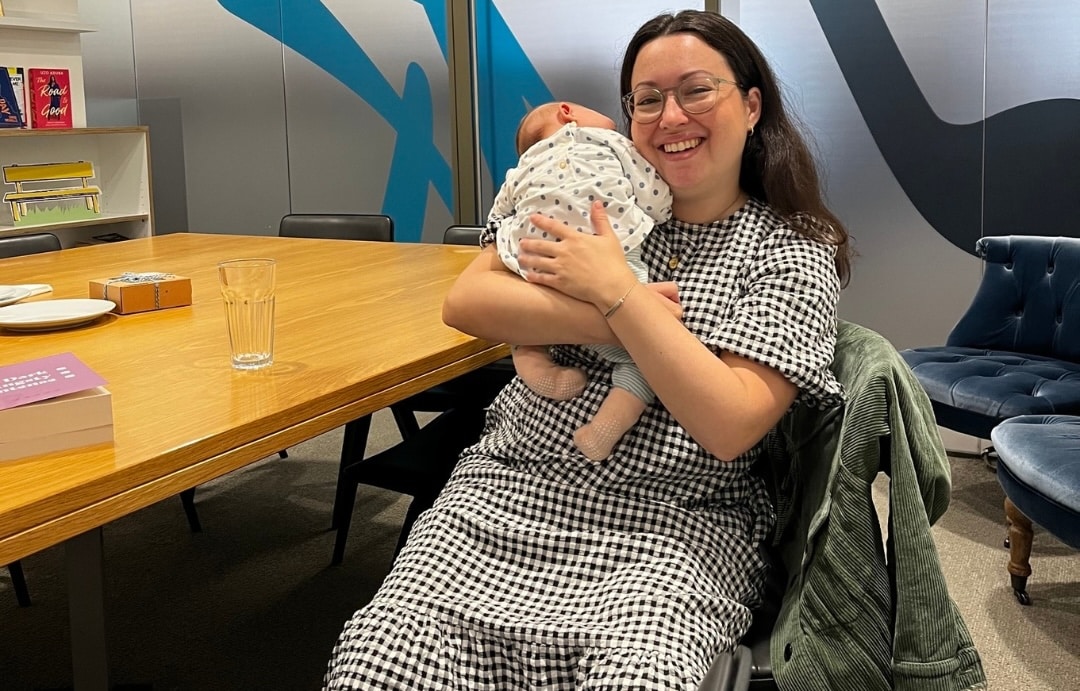
Hayley Steed, Abigail Avis’ agent, helps out with her baby after a meeting at publishers Hodder & Stoughton
When she was a few weeks old, Wet Ink went out on submission. I’ll try and paint a picture of the weeks that followed. I was so lucky, beyond my wildest dreams, to have multiple editors wanting to acquire it. I took meetings and nursed the baby, desperately trying to listen to their campaign ideas whilst simultaneously tuning into the breathing and chugging sounds of my daughter, worrying that a hiccup would result in a boardroom of publishers witnessing her vomit into my lap. It was rapid and exciting and a slightly insane time on account of the lack of sleep and accompanying adrenaline. In those meetings, editors shared their thoughts with me on what direction they’d take with a structural edit and whether that aligned with my own ideas of what I hoped the book would achieve.
It is so important to find an editor who has a clarity of vision and who you get on with. The other thing that I didn’t anticipate, but appreciate so much now, is that I wanted to be challenged by my editor. I wanted Wet Ink to sing and I know from experience that when your head is resisting a change, it’s because you absolutely need to make it. That is where good editors come in. Lucy Steward and Jo Dickinson (Hodder & Stoughton) met with my US editor Cassidy Sachs (Dutton) to align notes and deliver a joint editorial letter. I asked what they were looking for at this developmental stage, and here’s what Lucy said:
The structural editing process is often the most daunting part of the process – that’s where we, as editors, really have to dig into the plot and characterisation of the book and ask ourselves questions like: what do we want people to take away from this read? What do we want the stand-out message to be? How do we want people to react to these characters? We often unpick a few layers in order to build it back up again.
With Wet Ink, though, there were so many clear exciting elements to this story to pull out, our task was almost about working out which of a whole host of exciting angles we wanted to push the hardest. What I think we allconnected to most strongly was the community aspect of this book: in the editorial process we realised this is not just a story about Mitzy, it’s a story about the community around her. This warmth and safety in community was what we most wanted people to feel as they got lost in the story.
The harder you work on refining the structural edit – the easier the rest of the process becomes! Everything is easy once you have a solid base.
Lucy Steward, deputy publishing director for Hodder Fiction
After we decided on delivery dates for the manuscript I got to work, but first I had to figure out what to do with the baby. She was nine weeks old when I started editing. She’s nine months old today and I’m at the very final stage of the process, checking for commas and switching out the odd word. I used part of my advance to pay for childcare, and jumped between the living room and a small desk at the other side of the flat, editing for as long as she was asleep, stopping mid-sentence to come through and breastfeed her, the scene shifts and point of view ticking over in my head as I waited for her to unlatch. I called in a lot of favours. Neighbours would take the children for a few hours, my partner and I swapped the baby like a relay baton, and grandparents clubbed in to give me as much time as possible to edit.
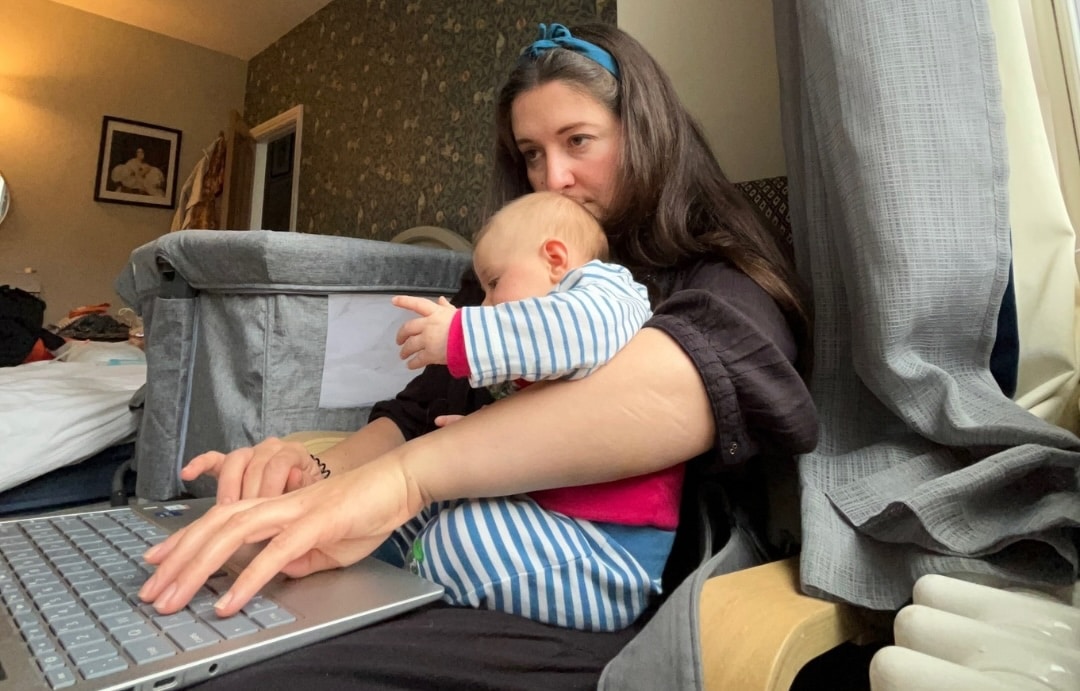
Abigail and her young editorial assistant
The characters, arcs, and sub-plots are more distinct now. Some of them have been removed entirely. The prose is sharper, the opening line having been re-written more times than I can count. As it stands, the book that appears on the shelf in February 2027 will be the tenth draft. Five or six structural edits, another couple of copy edits, and the final passes making up the total.
In the summer, we’ll be six months out from publication and I’ll be able to share details of how the cover was designed, how international rights work, and what preparation I’ve been doing for talking about this book in front of a crowd.
Until then, I’ve got a PDF to go through for the final (final!) time. Not daunting at all!
This article originally appeared on our Substack.
You might also like:
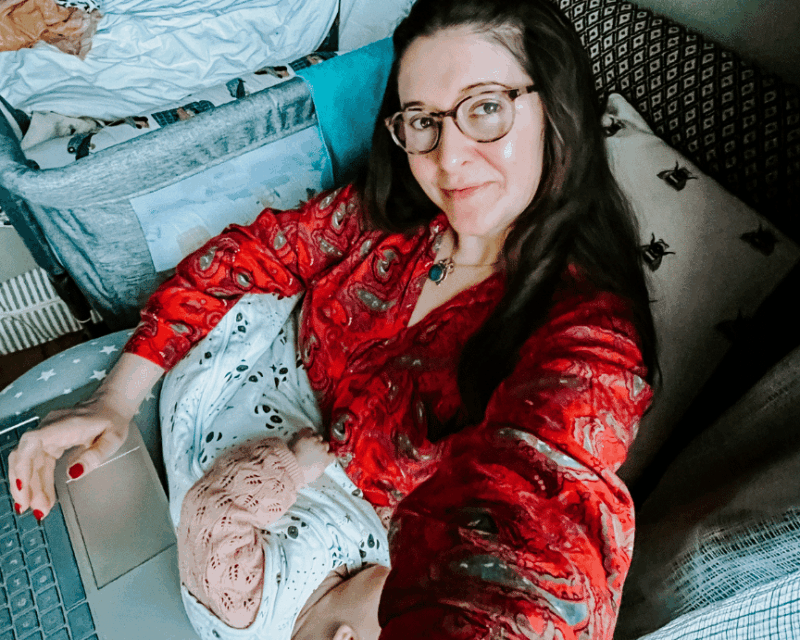
From first draft to final edits: Abigail Avis on writing Wet Ink
In the first of a four-part series on the publication of her book, Wet Ink, Abigail Avis takes us back…
Crown of Blood: adapting the Scottish play into the Yoruba play
As we mark Shakespeare’s birthday, Oladipo ‘Dipo’ Agboluaje takes us behind the scenes of his Yoruba epic, based on Shakespeare’s…

Eleven tips to help you become a better writer
“You have to sit down and do it and keep on doing it until you get there.” Our RLF Fellows…